• News
  • Spilled Ink
    • Complete List of Plays
    • 7 Ghosts
    • Cavalry
    • Chekhov in Hell
    • Dead Souls
    • Emily Rising
    • Here's What I Did With My Body One Day
    • Mile End
    • Negative Signs of Progress
    • My Life Is a Series of People Saying Goodbye
    • Plum in Prison
    • Restless Dreams
    • Slow Air
    • Slow Beasts
    • Static
    • Theatremorphosis
    • You & Me
    • Zola: Blood, Sex & Money
    • Complete List of Publications
    • 1956 and All That
    • British Theatre Reports
    • Cambridge Companion to British Theatre since 1945
    • Contemporary European Playwrights
    • Contemporary European Theatre Directors
    • Modern British Playwriting 2000-2009
    • No Theatre Guild Attraction Are We
    • On Churchill's Influences
    • Paris Commune
    • Playwriting
    • Sarah Kane before Blasted
    • Sarah Kane Documentary
    • The Suspect Culture Book
    • Theatre &
    • Theatre & Globalization
    • When We Talk of Horses
    • Writ Large
  • Stage Directions
  • Wilding Audio
  • Links
  • About
  • Contact

Dan Rebellato

  • News
  • Spilled Ink
  • Plays
    • Complete List of Plays
    • 7 Ghosts
    • Cavalry
    • Chekhov in Hell
    • Dead Souls
    • Emily Rising
    • Here's What I Did With My Body One Day
    • Mile End
    • Negative Signs of Progress
    • My Life Is a Series of People Saying Goodbye
    • Plum in Prison
    • Restless Dreams
    • Slow Air
    • Slow Beasts
    • Static
    • Theatremorphosis
    • You & Me
    • Zola: Blood, Sex & Money
  • Books, etc.
    • Complete List of Publications
    • 1956 and All That
    • British Theatre Reports
    • Cambridge Companion to British Theatre since 1945
    • Contemporary European Playwrights
    • Contemporary European Theatre Directors
    • Modern British Playwriting 2000-2009
    • No Theatre Guild Attraction Are We
    • On Churchill's Influences
    • Paris Commune
    • Playwriting
    • Sarah Kane before Blasted
    • Sarah Kane Documentary
    • The Suspect Culture Book
    • Theatre &
    • Theatre & Globalization
    • When We Talk of Horses
    • Writ Large
  • Stage Directions
  • Wilding Audio
  • Links
  • About
  • Contact

Wild Blue Yonder

Doctor Who is back. By that I don’t just mean it’s back on TV but it’s also back in glory. Russell T Davies is back, bringing all his extraordinary showmanship, genius with television, relentlessly upbeat positivity and more. David Tennant is back, the most iconic Doctor of the century, wiry, sparky, clever, funny, nerdishly handsome. Catherine Tate’s Donna is back, funny, ballsy, mouthy, vulnerable. It’s just been the 60th anniversary of the show and it’s all over our screens and the Internet - with (almost) all past episodes freely available online for the first time.

It’s hard to remember how nervous we were in 2005, wondering whether its return to our screens would be a triumph or disaster, or something in between that ran for a couple of years and then vanished again. Who could have predicted that Russell T Davies would reinvent Doctor Who - and restore it to the essential Saturday-night family viewing that it was in the late 1970s? Who would have thought it could have ignited the imaginations of several generations of children all over again?

I think the show has been in pretty good hands over the last eighteen years. The Steven Moffatt era had some great stories, wonderful dialogue, superb characters and monsters, even if sometimes they were weighed down by their concepts. The Chris Chibnall era meddled bafflingly with the show’s backstory but there’s some terrific storytelling and Jodie Whittaker, I think, totally made the case for a female doctor. But there was an additional brio and joy and confidence in the Russell T Davies era. I hadn’t appreciated how much I’d missed that until last week’s first episode, The Star Beast, a glorious romp which no doubt outraged the opponents of woke and cheered up everyone else. It reminded me of Rose, the first episode of the reboot. Neither of them is a particularly complicated story; much time is spent locating the action in a completely recognisable ordinary contemporary London; the Doctor bursts in halfway through things and the tone is broad-brush, affectionate, funny and fairly straightforward. This is not faint praise: RTD knows how you relaunch a show and this formula works to establish what we’re watching. It’s direct and colourful and enveloping.

But this week’s is another matter. Wild Blue Yonder is an instant classic. The production team were extremely tight-lipped about this one, leading to all kinds of wild speculation about what it might involve. The answer was that it only featured Tennant and Tate, landing accidentally on a spaceship at the edge of the universe, abandoned by the TARDIS, and forced to explore it alone. Slowly they realise they have encountered a pair of shape-shifting aliens who are trying to clone their identities. And then they realise why the spaceship is abandoned, why a robot is walking slowly down a long corridor, what the mysterious words they hear are, and how they will escape.

It’s brilliant. It’s kind of perfect. It’s actually a story in a long tradition of Doctor Who - maybe as far back as the third ever story The Edge of Destruction which only featured the TARDIS crew, their characters morphing, a growing sense of threat and a mystery to be solved. In the modern series, there are more examples - e.g. Midnight, Listen, Flatline - which are largely focused on the regulars and making the familiar unfamiliar.

Wild Blue Yonder works so well. It is high concept without being weighed down by it. It doesn’t overcomplicate. It actually nods to the Chris Chibnall mischief, affirming at one point that the Doctor may not be from Gallifrey, but this becomes a character moment between the Doctor and Donna, not a laborious bit of exposition. The creatures’ attempts to clone the Doctor and Donna go wrong in a way that is a mixture of weirdly comic and deeply unnerving, The design is beautiful, the resolution was perfect, our two protagonists carry the whole thing impeccably. The whole thing feels completely confident about what it is: a conceptual, SF thriller located deep in the uncanny. I think it might be the best Doctor Who for a decade.

And it was bookended with a delightfully silly encounter with Isaac Newton — ‘He was hot,’ says the Doctor. ‘Oh is that who I am now?’ ‘It’s always been pretty close to the surface,’ says Donna archly — and marvellously, movingly Bernard Cribbins gets a farewell appearance as Wilfrid Mott. It’s a lovely scene, beautifully played, and then all hell breaks loose - to whet our appetite for next week.

It’s as good an hour of TV as you’ll see this year. Doctor Who is back.

December 3, 2023 by Dan Rebellato.
  • December 3, 2023
  • Dan Rebellato
  • Post a comment
Comment

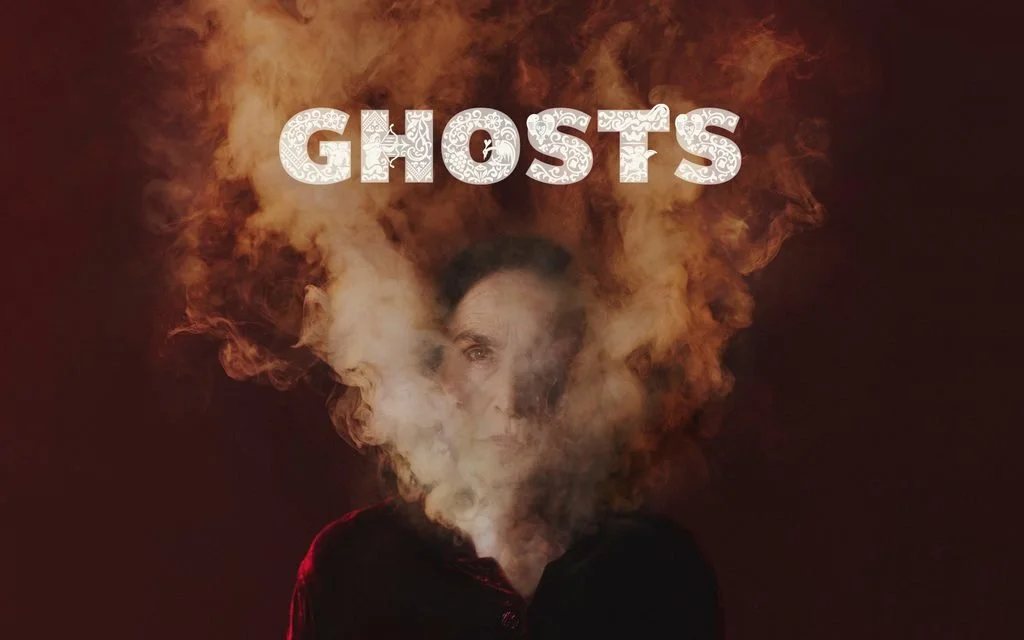
Ghosts (Sam Wanamaker Playhouse)

CONTAINS SPOILERS!

Ibsen’s Ghosts was written and published in 1881 and did not get a professional production for two years. Bear in mind that his previous play A Doll’s House had made him the most talked-about playwright in Europe and beyond. But Ghosts was considered so revolting, so obscene, so repulsive in its dwelling on the seamier sides of slides that not only would theatres not stage it, even the printed edition was a flop with half the copies being returned from the shop. Like the freethinking pamphlets in Mrs Alving’s sitting room, Ghosts was not something to be seen in a respectable home. In January 1886, years after the play had been published, there was a performance of A Doll’s House at the Meiningen Theatre, Germany, and local students heard that there would be copies of Ghosts available to read and so they sat in the stalls passing the books from hand to hand reading Ghosts while A Doll’s House played on stage. When the play was first performed in London, a Daily Telegraph Editorial infamously described it as:

an open drain; […] a loathsome sore unbandaged; […] a dirty act done publicly; […] a lazar-house with all its doors and windows open.

Of course, now Ghosts is a cornerstone of the western dramatic canon, one of the most famous and widely-performed plays in the world. The current run at the Sam Wanaker Playhouse at Shakespeare’s Globe is the 15th production worldwide this year.

Classic status can be a prophylactic, coating and surrounding a play and rendering it harmless. Ghosts was intended as an irritant, to get under the skin. It feels like Ibsen was saying ‘you thought A Doll’s House was shocking? You fucking wait’. But it’s hard to retain that sense of shock when we are being handed something that we are told is a classic. Can classics ever really shock? We have the distance of time, the cotton wool bedding of cultural prestige, the cosiness of familiarity.

I’ve been thinking about this because I’ve been teaching my university module on Naturalist Theatre. As you know, in universities we sometimes are encouraged to give content notes on work that we are requiring students to read. I should say, where I teach, we are not required to do this; it is academic judgment whether this is appropriate. I feel in two minds about it: it annoys me when content warnings act as spoilers; sometimes I feel like a focus on potentially triggering contents ignores context (Please note that the musical Oklahoma! contains references to drug use, prostitution, pornography, and sexualised violence - which it does but, really?). On the other hand, content warnings allow students who are dealing with serious traumatic experiences the opportunity to gather resilience to read work effectively. (This is important: content notes are to enable students to read, not to give students the option not to read.) With Naturalism, my ambivalence is particularly strong: (a) it can feel silly to put a content notice on a play as famous as Ghosts; but (b) this play really does deal with some shocking material and not to acknowledge that seems both disrespectful to the students and actually to participate in the neutering of this play.

So I was pleased to see that Shakespeare’s Globe have also given a content notice for this play.

Content Guidance: The play contains themes of incest, euthanasia and references to suicide.

…to which they could also have added ‘sexually transmitted disease, prostitution/sex work, blasphemy, and familial sexual exploitation’. What I was even more pleased about when I watched it last night is that the cluster of young people around me (not my students, but student age I’d say), were audibly shocked and horrified by what they were watching. There were gasps when it became clear that Engstrand was encouraging his daughter into sex work in the Sailors’ Home he was planning; jaws dropped when it became clear that Osvald has become a romantic and perhaps sexual relationship with his half-sister. There were shocked looks exchanged when they realised that Osvald was asking his own mother to end his life. And more.

And they were right. Partly because Ibsen’s play has confrontation and antagonism in its bones. But partly because Joe Hill-Gibbins’s adaptation and production has pushed the play’s challenge to the fore. He’s following the lead of Richard Eyre, whose own adaptation/production at the Almeida ran at 90 minutes straight through. Hill-Gibbins’s is 100 minutes (and the show was advertised at 2hrs20m with an interval so clearly some major surgery has happened recently). But it gives the play’s unfolding horror a great rush of energy. Hill-Gibbins has done his own version which makes the action of the play feel continuous (though I think there are meant to be time jumps) but puts some of the possible subtextual drivers of the characters more to the foreground: Manders appears to perv on Regine early on and throughout and Regine hints that she would like to become his mistress, for instance. Engstrand’s plans for the Sailor’s Home are underlined more forcefully. The incestuous Osvald-Regine relationship is made more confrontationally direct than I’ve seen before.

This version is sort of modernised? Actually that’s not clear to me: it’s kind of modern dress, though the costuming is kind of plausibly clothing that could have been worn in the 1880s and now (Mrs Alving’s velvet dress, Father Manders’s suit, Osvald’s cardigan) which means I’m not sure if it’s set in the present or modern dress but set in the 1880s, or maybe set in. some no-time between now and then. Rosanna Vize’s set is an open shaggy magenta carpet that suggests maybe coastal heather; at the back are full height (10 ft?) mirrors, which double ands ghost the action. The magnificent end of Act 1 of Ibsen’s play has the remembered flirtation with (or assault upon) a female servant repeated in Osvald’s flirtation with Regine; they see it happen in the mirror, as if it’s in the next room or even in their minds. The set is, as always in the Globe spaces, in dialogue with the theatre; the candelabras are part of the motif, being lit by a servant at the beginning and then horribly snuffed out at the end. I wasn’t sure about the set at the beginning but soon came to love it; the cast walked barefoot over that carpet, giving this very indoor space a rougher more open landscape. The louvred mirrors glittered and multiplied the candlelight which itself created pockets of concealment and revelation in this play of secrets revealed.

This is a great cast. Sarah Slimani plays Regine as a woman on the make but also someone with an edge of desperation who will do whatever she needs to survive. Greg Hicks’s Engstrand is an insinuatingly comic figure who implies everything and says nothing. Paul Hilton’s Father Manders is an oily moralist with slippery morals. Stuart Thompson’s Osvald is clear-sighted and clear-headed, until he isn’t, a figure of rage and desperation. And Hattie Morahan as Alving is superb: more youthful and more sensuous than she is usually played, she is our guide through the play, watching aghast as the hidden horrors unfold under her roof. She holds the whole thing together. A decade after she played Nora at the Young Vic, she is now the woman trying to keep the family from falling apart. Her slow realisation that her son is asking her to end his life was devastating to watch.

Joe Hill-Gibbins’s adaptation is sinuous and driving. At moments, I sensed his inexperience as a writer in that the psychological through lines of the characters seemed sometimes broken and discontinuous, the actors having to work too hard to maintain clarity of situation and purpose. But mostly, this is a glorious revival and a blissfully nasty 100 minutes to stay locked in this Lazar house with the doors and windows closed.

November 19, 2023 by Dan Rebellato.
  • November 19, 2023
  • Dan Rebellato
  • Post a comment
Comment

The Reckoning

The BBC has broadcast The Reckoning, a four part drama about the life and crimes of Jimmy Savile. It got some angry responses before it was on, with, for example, Pragya Agarwal writing in The Independent:

It […] feels insidiously callous and thoughtless that an organisation that played a role in glorifying a sex offender and profiting from him, while covering up his actions for many decades, are once again capitalising on his “brand” and the fascination that viewers have with monsters and true crime.

It is neither “sensitive” nor “complex”, but relatively simple. This series is a bad idea – and is being made at the emotional expense of all the people who were once abused by this very man. Their worst nightmares are being brought to life on screen, to be enjoyed by millions – and creating entertainment from the loss of their childhoods, dignity and self-respect.

Richard Morrison wrote in the Times that:

When a famous man (it’s overwhelmingly men) is exposed as a serial abuser on a vast scale, there’s an argument for saying that their names should be erased from human discourse as soon as possible, not memorialised in films and TV docudramas.

a view that Morrison endorses, urging ‘Tim Davie should think again about the BBC’s Jimmy Savile drama’, adding ‘I wish the BBC had never embarked on this sordid project’.

The series was made in 2021 and the BBC appears to have been uncertain about how to schedule it, hesitating before broadcasting it in 2022, pushing it back to 2024, then bringing it forward to last month. As it was going out, the BBC received more flack from commentators, for supposedly letting the BBC off the hook, even though the production was made by ITV Studios, precisely to avoid any accusations of a whitewash.

But it’s now out and I watched it. The first thing to say is that I think it’s a very serious piece of work, telling a horrific, upsetting and disturbing story with tact and restraint, making quite clear the horror of Savile’s crimes, but never dwelling unnecessarily on the acts themselves. The aim of the drama, I’d say, was to show how Savile organised his life, persona and reputation so that he could perpetrate so many crimes and get away with it. It also allowed us to speculate - because that is really all we can do - about his mental state, the things driving him, and how far he understood that he was doing wrong.

The keystone of the production is Steve Coogan. It’s hard to think of anyone else who could have pulled off this performance; Coogan started as an impressionist, including of Savile, but became a major comic actor. He has both the chameleon ability to become Savile and the power to manifest Savile’s unpleasantly malevolent charisma. He plays Savile as someone with impenetrable self-confidence that fractures only slightly in the later years though still remains a kind of iron fortress around his personality. Watching it I was very struck how the enormously eccentric performance of self that Savile’s maintained throughout his life - the peculiar hair, the catchphrases, the cigars, the jewellery, the tracksuits, the scrupulously maintained accent, the attitudes - were both a smokescreen and a distraction. There was so much noise to Savile’s signal; he seemed so weird that it was hard to spot his actual weirdness. (That said, when people who gave him a platform claimed to know nothing about his sexual secrets, I am reminded that in the playground, aged 10, it was widely said that Savile was a paedophile and we didn’t say that about every tv star, just him. How did we know that — if we did, strictly. know that — and his bosses not?)

And then the moral and emotional heart of the production are the survivors, a few of whom are given space and time to bear witness to their own awful treatment at Savile’s hands, both in first-person testimony and as figures in the drama, where we see them shattered by Savile’s reappearance on TV and finding themselves having to relive their abuse, some of them resolving finally to come forward. Those moments are perhaps a hint at another of the drama’s social ambitions. While Agarwal suggested - years before the broadcast - that such a drama would be merely triggering for the survivors, The Reckoning is maybe suggesting here that by laying bare the horrific strategies of an impenitent serial abuser, it might embolden survivors of other abusers to come forward. I hope that works.

This feels like a difficult time for drama-documentaries like this. We are, I would suggest, is a slightly fiction-averse world, where people, for various reasons, many of them good, wish to assert the right to tell their own stories and not have other people tell those stories for them. This is evidently a response to the way that stories by the marginalised have been taken and retold by the powerful in ways that perhaps misrepresent those stories. In particular people of colour have found their stories twisted into shapes that relieve white people of responsibility for their oppression, or tell those stories through white saviours, and so on. For those reasons, there is - rightly - a demand that people of colour should be given space to find ways of telling their stories. But this can also be generalised - wrongly, in my view - into a view that we can only ever tell our own stories, that all storytelling should be personal testimony (‘speaking my truth’), and that there is something monstrous about the very idea of fiction. Now, these views don’t seem to have stopped people making fictional films, TV, or theatre, though there’s been a lot more autobiographical work in the theatre than I remember from a decade ago. But where I think it does manifest quite significantly is in the uneasiness that people have about a show like The Reckoning, where there is a presumption - as witnessed by the two commentators who were able to form a judgment of the show before seeing it - that the very idea of making a drama-documentary about Jimmy Savile must be a ‘sordid project’.

I think this betrays a certain philistinism about art. The idea seems to be lurking here that there are certain topics that are too serious and important for art - implicitly frivolous and trivial - to address. And perhaps it is specifically fiction that is the concern here: creating fictions, telling tales, making stories, isn’t this all essentially lying? Hence the current wish to extract the poison of fiction by making everything authentically personal. Our Puritan history still bears on the present. But I think this massively underestimates the value, power and scope of dramatic storytelling and the insights, the complexity, the perspective that it can bring to any subject, any event, any horror.

I thought of this watching the final episode. The drama is called The Reckoning and it is in the final episode that we understand why. The walls are closing in around Savile; his protective celebrity is beginning to fray; he seems to lose control of his rigorous secrecy, almost, it seems, wanting to confess; accusations are made and he is interviewed by the police; and his interviewer (the drama is sort of threaded through a writer interviewing Savile for a biography) loses his patience with Savile’s evasions and Savile, desperate for attention, promises he will tell all but dies before he can make good on that promise. The impression given is that, before his death, Savile did know that his crimes would catch up with him, that the game was up.

The biography was written. Dan Davies’s In Plain Sight: The Life and Lies of Jimmy Savile (Quercus, 2014) was quickly acclaimed for its meticulous investigation of this deeply mysterious and unpleasant man. I read it soon after it came out and … well… I can’t say I enjoyed it, but it was a very powerful account that began to make sense of this terrifying enigma. Now, at least as I read it, Dan Davies was not nearly as heroic in confronting Savile as he appears in The Reckoning. In the book, it is clear that he did repeatedly challenge Savile about the circulating rumours (as did Louis Theroux, briefly, in his 2000 documentary), but in the TV show Davies loses his rag and announces that he’s had enough and is leaving, never to return. This, in turn, shocks Savile, who under the guise of holding court actually has a desperate need for attention, even maybe companionship and, humbled, old and broken, promises to tell his biographer everything. As far said I read the book, this never happened.

But is that wrong? Even if it did not happen, even if there is no proof that Savile ended his days a terrified, lonely man, desperate to confess, petrified of damnation, haunted by his thousands of evil acts, was The Reckoning not right to believe that the Catholic Savile must have seen death approaching with fear? Stripped of his celebrity, isolated by own misanthropy, dislikeability and fastidious peculiarity, are we not entitled to wonder if he was tortured by his own twisted memories? I know it’s easy to think that a man capable of committing those acts might have sufficient sociopathy to protect him from guilt, but that is maybe to fall into the trap that when we see these people as monsters because of their acts, we absolve ourselves of any need to understand them. If they are monsters, there is nothing to say about the. They are nothing like us. But isn’t it more terrible, more unsettling to acknowledge that Savile was a human being, like us? Even typing those words makes me shudder.

Which is why, when people say that reality is stranger than fiction, first I tend to think ‘then you haven’t been reading the right fiction’, but second, and more important, I really believe sometimes fiction can be more truthful than reality.

November 6, 2023 by Dan Rebellato.
  • November 6, 2023
  • Dan Rebellato
  • Post a comment
Comment

Now and Then

As you will know, a new, final Beatles song has been released. ‘Now and Then’ is based on a 70s Lennon piano demo. It was attempted during the ‘Threetles’ sessions of 1994-5 that also produced ‘Free as a Bird’ and ‘Real; Love’, but abandoned because of the difficulties involved in extracting John’s voice from the cassette, his piano, and various background noises. It’s also said that George Harrison thought the song was ‘fucking rubbish’, though Paul now claims he was referring to the quality of the recording. Paul has always wanted to finish ‘Now and Then’ and has floated the idea several times in interviews. Now, using the AI technology that Peter Jackson used so spectacularly to clean up the sound for his Get Back documentary, Lennon’s vocal has been newly isolated. Paul has restructured Lennon’s affecting but meandering draft composition into something more musically robust. George’s acoustic guitar from the 1995 sessions was mixed with new bass, drums and vocal from Paul and Ringo, with Giles Martin adding a string arrangement.

It is worth observing that ‘do I like it?’ is sometimes the least interesting thing to say about an artwork. Whatever anybody thinks about this song, a new track featuring all four of The Beatles is a gigantic event in world culture. It has a very clearly and deliberately valedictory quality; Paul has overseen this as a way of placing a final bracket around The Beatles, made even clearer by placing (a new mix of) ‘Love Me Do’, The Beatles’ first single, on the b-side. This is the alpha and the omega, the now and the then, with everything in between implied.

It is also a song replete with signification. Despite the graphic that The Beatles have been using to promote the song (above), I gather that John did not give the song fragment a title. The title is Paul’s choice and undoubtedly resonates with the last words John spoke to him face to face ‘Think of me, old friend, now and then’. These words would tear Paul apart when, soon after John’s death, Carl Perkins presented Paul a new song called, coincidentally, ‘Now and Then’ and it prompted a whole new access of grief. For Paul, one senses, the song is John’s love letter to him.

But it is also, for Paul, his love letter to John. The whole labour of working on this song, keeping faith in it, lavishing care and attention, offering discreet buttressing and support to the song, without drawing attention to himself (no ‘Whatever happened to / The love that we once knew…’ middle-eight here, as there is in ‘Free as a Bird’), playing and singing with John’s voice in his ears, this is all a labour of love.

For us, it is also a song about The Beatles, our love for them and their thanks to us, but also a reflection on this moment.. It feels like a bittersweet acknowledgement that while they are back with new music they’re not really back. The song’s (in some ways) incoherent lyrical play with leaving and staying resonates with the ubiquitous presence of The Beatles and their regretted absence. The song itself is both an announcement that we’re back and this is the end.

I listened to it on a train to work a few minutes after 2pm on Thursday. I remember hearing ‘Free as a Bird’ when it was first broadcast on BBC Radio 1 in December 1995. (‘I have to say, that’s very disappointing’ intoned the forgotten DJ.) Now - as then - I am struck by how extraordinarily, bafflingly recognisable Ringoi’s drumming is. It’s the first thing you hear on ‘Free as a Bird’ and that heavy, powerful, slamming sound, but with elegantly surprising flurries and fills enlivens ‘Now and Then’ immensely. Ringo makes a track ‘The Beatles’ every bit as much as John’s voice.

And oh my, it is arresting how clear the voice is. Unlike ‘Free as a Bird’ and ‘Real Love’ where the voice, wreathed in echo, the recording smothered in synth pads and a more self-consciously Beatlesy production from Jeff Lynne, floated spectrally above the song, here he feels almost upsettingly alive and present, right at the heart of the song. In ‘Free as a Bird’ Paul sounded, paradoxically, younger than John. Now Paul’s older voice sits quietly under John’s springy thirtysomething vocal (which sounds, somehow, younger than on ‘Love Me Do’).

Do I like it? Yes, very much. It’s a superb bit of craft by Paul, subtly repointing and sharpening the song, and the arrangement gives it purpose and drive. Giles Martin’s string arrangement is a sensitive Martin Family string arrangement. He has not tried to write something that sounds like his father’s work any more than he tries to sound like his father when he speaks; he just does, and it just does.

Some people have criticised the lyrics. They are simple, they say; sentimental, even trite; some of them seem to have a boilerplate quality that might have been fixed later had John taken it to the studio. All of this may be true, but The Beatles always knew that lyrics were parts of songs and it’s the overall effect that matters. Part of what Paul has done for John, a last fond favour, is to build the song so that these simple words seem Ruch and full. I detect something deliberate in the slightness of the lyrics: ‘now and then / I want you to be there for me / Always to return to me’ seems to me a rather affecting juxtaposition of the fleeting and the permanent, a mock-casual tone that masks deep feeling. Which could not be more John.

I am sure that, at some point, someone will be inclined to create more new Beatles tracks. There are more John demos. There are reputed to be things the Threetles worked on (‘Grow Old With Me’? ‘All for Love’?). There may be 60s fragments that could be finished. Generative AI might be involved; significant artists might be involved and, who knows, the results might even be good. But I am sure neither Paul or Ringo would want any part in it. This is too good an ending to spoil.

And that of course that’s why I can’t hear this without mourning. It has the quality of a last door closing;. It’s a new Beatles song that says there will be no more. It says hello, goodbye.

November 4, 2023 by Dan Rebellato.
  • November 4, 2023
  • Dan Rebellato
  • Post a comment
Comment

Robert Holman

Robert Holman

At this year’s TaPRA conference, in the Directing & Dramaturgy working group that I co-organise, we had a panel of two papers on Robert Holman. We agreed that I might give a slightly longer introduction to this panel, perhaps to situate Holman for delegates unfamiliar with his work and I thought I’d reproduce it here.


Robert Holman, who died in December last year, was and is very much the playwright’s playwright. His writing life bears some of conventional marks of success: he was widely performed by two of our national companies, the Royal Court and Royal Shakespeare Company; there was a retrospective season of his work at the Royal Exchange. But he was never part of a movement and his mercurial work – both flamboyant and subtle, both deeply realistic and wildly, preposterously fantastical – is hard to describe, difficult to align clearly to the strongest currents of British playwriting. As such he was never thrust into the centre ground of British theatre culture.

Holman was born in 1952 and grew up on a farm in the Cleveland Hills near the market town of Guisborough, North Yorkshire. His early work was performed at the Bush, the Cockpit, the Traverse and Theatre Upstairs. In the 1980s, perhaps the peak of his productivity and centrality, he wrote prolifically for the Bush, Royal Court and RSC. Some of the plays he wrote in that decade – Other Worlds(1983), The Overgrown Path (1985), Making Noise Quietly (1987), and Across Oka(1988) – are, I think, among the finest plays written anywhere in the last hundred years. The third of those, Making Noise Quietly, is the only one of those that seems to have a secure position in the repertoire; there were major revivals by the Oxford Stage Company in 1999 and the Donmar in 2012. Meanwhile, its structure has been widely influential – it comprises three apparently separate short plays but with emotional echoes of fleeting encounters, shared pain, moments of understanding between strangers – and can be seen directly influencing 2000’s Under the Blue Sky by David Eldridge and 2011’s Wastwater by Simon Stephens. Both of those writers have acknowledged their admiration for Holman’s work and indeed all three collaborated on the apocalyptic A Thousand Stars Explode in the Sky in 2010, the younger two, I thought, showing the most Holmanesque sides of their work in deference to the senior writer.

At a post-show conversation with Nick Hern after a performance of Bad Weather at the RSC in 1999, Robert Holman described his writing process like this. ‘I start writing every morning at 9.30. It can’t be before or after that or the day is ruined. And then I just start writing until one of my characters says something that surprises me’. I’m quoting from memory but I’m confident this is pretty accurate because, first, it resonated very strongly with my own fledgling experience of playwriting and, second, because it resonated very strongly with my experience of Robert Holman. Not least in scene 6 of Bad Weather itself where the young thug Luke suddenly, apparently out of nowhere, declares his sexual feelings for Agnes, the visiting septuagenarian nanny of his friend’s mother.

In Other Worlds, eighteenth-century Yorkshire folk, whipped up in fear of a Napoleonic invasion, find an ape washed ashore and hang it believing it to be a Frenchman. But in a moment of magical surprise, just before the ape is hanged, he turns and delivers a speech to us, giving a whole new life to the play and its world. Watching Rafts and Dreams Upstairs at the Royal Court in 1990 I watched breathless the minutely observed domestic drama of the first half between clumsy Leo and his variously phobic wife Hetty, helped to a new kind of accommodation with the world by their neighbour Neil. He helps them clear the garden and dig up an old tree root, beneath which they find an underground lake, the waters in which, by the second half, have risen and flooded the entire world.

These moments of surprise are breaks in the texture of his work that both exemplify the complexity of his vision of how the domestic and the imaginative entwine each other but also of why he is such an indefinable writer. Is he personal or political? Contemporary or traditional? Are these essentially quiet plays – or do they make noise? If he’s political, what are his politics? He seems very current in many respects, yet there are hints of writers like Rattigan in his work, particularly in the aching sense of emotional disconnect and the restrained hints at queer dissidence, in plays like A Breakfast of Eels from 2015. Holman remains in some ways a mystery; he is a writer that among playwrights, in my experience, inspires something close to awe, though he has attracted much less attention among academics.

But this afternoon, we’re going to change all that! To help us think about this remarkable writer we have two wonderful speakers, Dr Poppy Corbett and Dr Rachel Clements…

September 18, 2022 by Dan Rebellato.
  • September 18, 2022
  • Dan Rebellato
  • Post a comment
Comment
Newer
Older

Dan Rebellato

playwright, teacher, academic


You may be here because you’ve come across a book, or play, or article of mine and you want to know more. Maybe you’re a student or a colleague or a friend or an acquaintance and you want to find out more about me. Maybe you are gathering ammunition for a vicious ad hominem attack that will expose me for the charlatan that I am.  

If so, you’ve come to the right place. Feel free to get in touch.

  • News
  • Spilled Ink
    • Complete List of Plays
    • 7 Ghosts
    • Cavalry
    • Chekhov in Hell
    • Dead Souls
    • Emily Rising
    • Here's What I Did With My Body One Day
    • Mile End
    • Negative Signs of Progress
    • My Life Is a Series of People Saying Goodbye
    • Plum in Prison
    • Restless Dreams
    • Slow Air
    • Slow Beasts
    • Static
    • Theatremorphosis
    • You & Me
    • Zola: Blood, Sex & Money
    • Complete List of Publications
    • 1956 and All That
    • British Theatre Reports
    • Cambridge Companion to British Theatre since 1945
    • Contemporary European Playwrights
    • Contemporary European Theatre Directors
    • Modern British Playwriting 2000-2009
    • No Theatre Guild Attraction Are We
    • On Churchill's Influences
    • Paris Commune
    • Playwriting
    • Sarah Kane before Blasted
    • Sarah Kane Documentary
    • The Suspect Culture Book
    • Theatre &
    • Theatre & Globalization
    • When We Talk of Horses
    • Writ Large
  • Stage Directions
  • Wilding Audio
  • Links
  • About
  • Contact

image.jpg
0014-hwid-full.jpg
photo[1].jpg
shapeimage_1.png