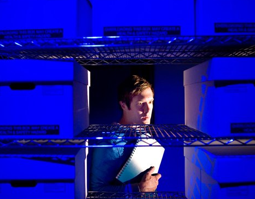
The marvellous Exeunt have a podcast series and the latest one is about playwriting. I'm one of the interviewees alongside Jack Thorne, David Edgar, Rebecca Lenkiewicz, Steve Waters, Catriona Kerridge, Tom Basden, Tim Foley and Stef Smith and it's curated by Tim Bano. I was interviewed by Tim and Annegret at the National Theatre on 9 July for an hour or more and wicked little bits of the interview have been dropped into the podcast. You can listen to it below:
Emile Zola: Blood, Sex & Money
I was embargoed by the BBC until last week. So I'm pleased to be able to say that the radio show I've been working on for the last eighteen months has now been announced. It's a large-scale adaptation of Émile Zola's twenty-volume 'Rougon Macquart' novel sequence. It's going out under the title Émile Zola: Blood, Sex & Money and will eventually be a 27-part adaptation divided into three intensive nine-episode seasons. The first season goes out in November, under the title BLOOD and I wrote episodes 1, 2 and 9 and was lead writer on the whole thing. I'm part of a writing team alongside Olly Emanuel and Martin Jameson.

The headline that's attracted all the attention is that Glenda Jackson is coming back to acting after 23 years as an MP to be our narrator, the 104-year-old Adelaide Fouque. She's also in scenes in episode 1. I can tell you, it was one of the most overwhelming experiences of my life sitting in a room watching Glenda Jackson speaking my lines. She carries in her voice undeniably commanding authority, moral integrity, a wealth of wisdom and experience. And she makes these astonishing choices, sometimes driving through the lines, sometimes gliding around them, finding doubt in certainty and always looking for complexity. And sometimes she alights on a word and she knows that it can take force and she pushes on it and all that experience, those 55 years of work turns the air into fire.
But it's not just the Glenda Jackson show; we've got together the most wonderful casts. Alongside Glenda Jackson in episode 1 are Robert Lindsay, Fenella Woolgar, Ian Hart, with Ashley Margolis and Shannon Flynn as the young lovers. At the beginning of each recording block you do a read-through; often actors, quite rightly, hold back, wanting to keep their ammunition dry for the actual recordings; this time, each raised their game, spurring each other on, outdoing each other, and the read through was one of the best I've ever attended. Listening in the cubicle as Robert Lindsay tries out different ways of saying a line to find the funniest version, Jesus: I wish I could meet the ten-year-old me watching and loving Citizen Smith or the twenty-year-old watching and loving GBH and tell him what was going to happen.
In episode two we have the wonderful Sam Troughton and Carla Henry, and also the lovely David Annen (with whom I've worked on three plays with very long titles: Here's What I Did With My Body One Day, And So Say All Of Us..., and My Life Is a Series of People Saying Goodbye). All beautiful actors. Sam Troughton full of warmth and feeling and exquisite comic assuredness, David Annen quiet authority, restless intelligence. In episode 9, we have the smashing Christine Bottomley, the wonderful Will Ash, and the lovely Sean Gallagher (who was also in My Life is a Series...). Will Ash all troubled intensity, Christine Bottomless seductive giggles and the most fantastic acting intuitions.
Elsewhere in the week there's Julie Hesmondhalgh, Bryan Dick, Robert Jack, and Georgina Campbell. It's a wonderful thing to be part of and I think it'll be pretty great.
The announcement got quite a lot of coverage, press and internet, local and international:
- The Guardian
- The Independent
- The Telegraph
- The Mirror
- Digital Spy
- Brent & Kilburn Times
- The Latin American Herald Tribune
- and around 100 more web pages
I'm not expecting you to follow those links. I just want to remember a time I wrote something that had to be embargoed by the BBC.
Are We On The Same Page? Approaches to Text and Performance
Announcing a new conference
The relationship between text and performance has been and remains a source of friction within British theatre. Frequently, it has been used as a way of superficially dividing different practices and establishing antagonist binaries between theatre-makers. In recent years, the rise of what Hans-Thies Lehmann famously defined as postdramatic theatre has mapped old divisions onto a new vocabulary: we can now speak of the dichotomy between dramatic and postdramatic theatre.
However, as theatre-makers continue to experiment with theatrical form, this dichotomy offers a limited picture. In an article for the Guardian Theatre Blog in 2009, Andy Field subverted existing binaries by suggesting that ‘all theatre is devised and all theatre is text-based’. But despite such challenges to the ways in which we understand the status of text in relation to performance, the schism between supposedly 'text-based' and 'non-text-based' practices persists in the ways theatre in this country is supported, staged, and studied.
In an attempt to look beyond this schism, we invite academics, practitioners and commentators to join us in questioning the relationship between text and performance and its significance for contemporary British theatre practice.
Questions that we hope to address on the day include, but are not limited to:
- What do we mean by an 'open' text?
- Can a text ever be completed?
- Is there anything a text makes impossible?
- Is it ever possible to be faithful or unfaithful to a text?
- To what extent can we think of the text as authoritative?
- How do different theatrical performances transform a text?
Schedule
10.00am Registration
10.30am Introduction from Catherine Love and Caitlin Gowans
11.00am Tim Crouch in conversation with Catherine Love
12.30pm Lunch
1.30pm Panel 1: Beyond the ‘text-based’/‘non-text-based’ divide (Chris Goode, Duska Radosavljevic, Andy Field, Jacqueline Bolton, Andrew Haydon, chaired by Catherine Love)
3.00pm Coffee
3.30pm Panel 2: Possibilities of text, narrative and performance (Vicky Angelaki, Rory Mullarkey, Deborah Pearson, Cathy Turner, chaired by Caitlin Gowans)
5.00pm Symposium ends
Booking
An Oak Tree Introduction

Ten years after it first appeared, Tim Crouch's wonderful An Oak Tree is being revived and performed at the National Theatre in its Temporary Theatre (I have no idea why they're no longer allowed to call it The Shed). It's looking all sorts of lovely. Oberon have republished the play with a few additions and emendations and - surely most thrilling of all - a new introduction by me. The intro talks about why Tim Crouch and his collaborators make experimental theatre that is actually just like ordinary theatre only more so. I try to suggest that the text only adds to the interest of the theatrical experience and suggests that it's a show that reminds us that language, theatre, and our sense of common humanity are things that rely on our shared imaginative belief.
It's available from all the usual stockists.
Stockists.
David Bradby
My old friend and colleague, David Bradby, died in 2011. I wrote about him at the time. A year ago I was asked to write an entry for him, more soberly, in the Oxford Dictionary of National Biography. You'll probably need access via a research library, but here's the link:
Rebellato, Dan. 'Bradby, David Henry (1942–2011).' Oxford Dictionary of National Biography. Online ed. Ed. Lawrence Goldman. Oxford: OUP, May 2015. 11 June 2015 <http://www.oxforddnb.com/view/article/103473>.

Chimerical by Lucy Kirkwood (Almeida/West End, 2013) Photo: Es Devlin
British Theatre Repertoire 2013
Chimerical by Lucy Kirkwood (Almeida/West End, 2013) Photo: Es Devlin
For a year or so, David Edgar, David Brownlee and I (together with research assistants Clare Ollerhead and Wendy Haines) have been working on an Arts-Council-funded project to gather and analyse data about the British theatre repertoire. As a pilot project, Arts Council England funded us to gather the data for 2013. Partnering with UK Theatre/SOLT, we have gathered in information about 5,250 separate productions, giving us details of shows, performances, attendances, box office and more. Our information is divided by region, sector, genre, form, and gender of writer. We are confident this is the most comprehensive set of information ever gathered on the British theatre repertoire.
Highlights of our findings include:
- For the first time since records began, new work has overtaken revivals in the British Theatre repertoire. New work constituted 59% of all productions, 63% of all seats sold, 64% of all performances and 66% of box office income.
- However, despite recent west end successes for plays like like Posh by Laura Wade, Chimerica by Lucy Kirkwood and Enron by Lucy Prebble only 31% of new plays in 2013 were written by women. Women’s plays are given fewer performances, are presented in smaller theatres and earn less money.
- Meanwhile London continues to outstrip the rest of the country, in terms of numbers of performances (46% of the UK total), attendances (54%) and box office income (66%).
- Unlike plays, only 29% of musicals are new, but they run for longer (representing 64% of performances) and win more attendances (68%). Newly-scripted pantomimes also out-perform old ones.
- A quarter of new plays are adaptations (mostly of novels). However, 86% of those adaptations are newly-written.
- New children’s theatre is booming. For every ten plays written for adults, there are now six plays written for children and young people.
You can read the whole report here.

Static in Orgeon
So my play Static has opened in a production by Third Rail Repertory Theatre in Portland Oregon at the Imago Theatre. I can't get over to see it but the photos look stunning - there's a large abstract set with a couple dozen lightboxes that serve as setting. The lighting is atmospheric, darkly coloured. The reviews suggest really strong performances from the cast: Maureen Porter, Sam Dinkowitz, Rolland Walsh and Kelly Godell. I'll stick some more photos up as I get them.
There's been some coverage:
- Review by Barry Johnson for Oregon Artswatch
- Review by Leela Ginelle for PQ Monthly
- Review by Meg Currell for Edge Media Network
- Review by Celina Russell for Oregon Live
- Review by Nathan Carson for Willamette Week
- The last dress rehearsal was movingly livetweeted, mostly under the hashtag #TRRTStatic
And the company has produced some resources:
- The company have put together a study guide, which is fun.
- And someone very enterprising has put together a YouTube Playlist of the tape that Chris leaves for Sarah.
Citizenship

Methuen Drama are producing a new series of play editions, under the title Modern Classics (see below). Each one has a new introduction by a theatre maker or academic. I've done an introduction to Citizenship by Mark Ravenhill. I talk about the relationship between theatre and citizenship, the history of citizenship in British education, and the play's complicated role in relation to these debates. I was helped by having interviewed Mark twice about the play for two of the three rounds of visits it paid to the National Theatre (I did programme notes twice for it). I enjoyed looking at the variations in the published versions of the texts and watching the play evolve towards greater and greater complexity. It was a pleasing opportunity to revisit this possibly rather overlooked play and I must admit I came out of the process with a reinforced respect for what Mark is trying to do with that play. It's a much subtler and more complex play than it appears; which is exactly how its tightly planned subversion is meant to work.
Since I know you'll want to buy it, here's a link: http://www.amazon.co.uk/dp/1472513835 and if you fancy not supporting tax-avoiding bastards, you could try here: http://www.bloomsbury.com/uk/citizenship-9781472513830/
British Theatre Repertoire 2013: presentation

So, I've been working with David Edgar and David Brownlee (of SOLT & UK Theatre) on a project to gather statistics about the British theatre repertoire. In 2008, the British Theatre Consortium was commissioned to conduct some research into the success (or otherwise) of Arts Council England's new writing policies. In the process we discovered that ACE had, since the mid-to-late nineties, had stopped gathering detailed statistics about the shows they were funding. That is, in the noble pursuit of light-touch regulation, they no longer required companies to let them know what they had produced. For our report, and with the support of the Council, we gathered those figures from 65 of the 89 'regular-funded organisations' and were able to offer a snapshot of the state of the repertoire between 2003 and 2008 in our report Writ Large.
Since then we've been encouraging the Arts Council to continue gathering those statistics. Finally a couple of years ago ACE gave us a very small grant to conduct a pilot, looking at 2013. We also hooked up with David Brownlee on the way who was enthusiastic about the project and had some great ideas about how these figures could be gathered with minimal disruption to the theatres involved. He was at Audiences UK at the time but, happily, moved to SOLT and UK Theatre (then the TMA), in which position, he was brilliantly placed to be able to gather all the data we needed. He was also able to identify a researcher, Clare Ollerhead, to 'tag' the data according to a set of categories that we all drew up.
As a result, we have the most comprehensive and detailed statistical picture of British theatre that has ever been produced. Our figures address only SOLT and UK Theatre and so exclude a great deal of fringe theatre. Nonetheless, the data covers 5,250 individual productions, 59,288 performances, 31,800,543 theatre visits, and £961,700,417 in tickets sold.
We have already published an interim report offering some basic information about the make-up of the repertoire. Yesterday at our conference Cutting Edge: British Theatre in Hard Times I presented some further findings about repertoire, the regions and gender. The full report will be published in the next couple of weeks but here are some of the headlines:
- Of new plays by a single writer presented in 2013, 31% were written by women. However, only 24% of performances were of plays written by women. Women’s new plays are performed in theatres which are on average 24% smaller than those in which men’s plays are presented. They attract only 17% of new play attendances and 13% of box office income for new plays. So women’s plays are given fewer performances, presented in smaller theatres with lower ticket prices, and therefore attract fewer people and lower box office income.
- Women have fewer adaptations staged. Adaptations – of novels and other works – are usually commissioned and involve a more active choice by theatres. 25% of all new adaptations are solely adapted by women, compared to 31% of new plays. The major adaptations in the west end – Matilda, Charlie and the Chocolate Factory, War Horse and The Curious Incident of the Dog in the Night-Time – were adapted by men.
- Women are dramatically less likely to undertake new translations of plays staged – again, usually commissioned and thus actively chosen by theatres. Of the 24 new translations in 2013, only 2 were solely by women (a mere 8% of all new translations).
- Nonetheless, women are more likely to have plays for children performed. 35% of plays for children and young people were written by women, as opposed to 31% of new plays as a whole.
- Compared with theatre between 2003 and 2009 (in the study Writ Large, from a smaller database), it appears that there has been an increase in the average size of theatres in which women’s work is performed, and consequently the attendance at women’s plays has increased. However, the gap between the total attendances at plays by women and men has also increased.
- In 2013, the National Theatre presented 22 new plays, of which 13 were by men and 3 devised. Of the 6 new plays written by women, only one – a translation – was presented in either of the National’s large spaces.
- 16% of all productions originate in London, with 13.1% of the national population. But London presents 46% of theatre performances, attracts 54% of all theatre attendances, and 66% of all box office income.
- While the commercial sector (the West End) contributes a little over a third of performances in London, it accounts for three-quarters of all performances, and 82% of attendances, and 85% of all London box office income.
- However, the subsidized sector sells its seats more efficiently. Attendances as a proportion of box office capacity are higher in subsidized theatres: the average attendance in the West End is 71%, while the average attendance in London subsidized theatres is 86%.
- Although ticket prices are much higher in London, prices throughout the country are in line with average household incomes in each area.
UPDATE:
The findings and the conference have started to get some coverage:
- The Stage:
- https://www.thestage.co.uk/news/2015/less-third-new-plays-written-women-report-finds/
- https://www.thestage.co.uk/news/2015/phyllida-lloyd-must-lobby-ace-enforce-5050-casting/
- https://www.thestage.co.uk/news/2015/fin-kennedy-funding-cuts-led-amateurisation-theatre/
- https://www.thestage.co.uk/features/2015/balancing-life-theatre-fatherhood/
- The Guardian:
- http://www.theguardian.com/stage/theatreblog/2015/apr/28/nothing-changed-female-playwrights-uk-theatres-gender-equality
- http://www.theguardian.com/stage/theatreblog/2015/may/06/effects-of-live-satellite-broadcasts-national-theatre-rsc
- http://www.theguardian.com/stage/theatreblog/2015/may/12/greatest-risk-in-theatre
- The Times:
- Exeunt:
- Globe and Mail (Toronto)
And the final, full report has had good coverage too:
- The Stage
- The New York Times
- Sunday Times
British Conference of Undergraduate Research

I was invited to give the opening keynote at the British Conference of Undergraduate Research 2015 on 20 April 2015. BCUR has been going for five years. It's an organisation that encourages students to understand their undergraduate work - usually in dissertations and other final-year projects - as research. Placing their work in this context encourages students to take autonomous responsibility for the work, to defend it intellectually, and, by presenting it in a conference like this one, fosters skills of economy, clarity and speaking to wide audiences. This conference was attended by over 300 students from across the world. I could only stay for the first day, but saw a stunningly good range of papers on subjects as diverse as Napoleon's horse Marengo, detection of secondary semen leakage in crime scenes, and the evolution of research within undergraduate curricula.
I was asked to set a tone, talk about the value of research, and generally be a bit of a cheerleader. My talk began with the material about Sgt Bertrand the nineteenth-century necrophiliac and I talked about the value of the unexpected discovery and the odd chains of research that lead you from Naturalist theatre to reading about the profanation of Parisian graves in the 1840s. I defended a view of research as 'a kind of pointless openness towards the world'. An inspiring day.
Cutting Edge: British Theatre in Hard Times
Saturday 25 April 2015, 10.00am-6.00pm, at Central St Martins, King's Cross, London
I'm co-organising a conference, look.

In 2007 at our conference, How Was It For Us?, we asked what happened to theatre in the Blair years. Now we ask what's changed under the coalition - for better or worse. In this day conference, organised by the British Theatre Consortium and hosted by the MA in Dramatic Writing at Central St Martin’s, a group of leading theatremakers and thinkers will reflect on the fortunes of British Theatre since the 2010 General Election. The arts have been subjected to substantial cuts in funding; newspapers have been firing theatre critics; evidence suggests that the arts are being drained from the school curriculum; concerns continue to be raised about theatre’s diversity, in the audience and onstage. And yet, there are success stories; audiences have held up strongly; the percentage of new work is higher than it’s been for a century; there seems no diminution of the quality of new plays, great productions, and extraordinary performances. Is this all against the odds? Or has the theatre found new purpose and power in the age of austerity?
Speakers include Adjoa Andoh (actor), Kate Bassett (critic), Suzanne Bell (Royal Exchange), David Brownlee (UK Theatre), Chris Campbell (Royal Court), Giles Croft (Nottingham Playhouse), David Edgar (playwright), David Eldridge (playwright), Chris Goode (performance maker), Christopher Gordon (Rebalancing our Cultural Capital), David Greig (playwright), Sarah Grochala (playwright), Fin Kennedy (Tamasha), Lucy Kerbel (Tonic), Phyllida Lloyd (director), Chris Megson (Royal Holloway), Elizabeth Newman (Bolton Octagon), Mimi Poskitt (Look Left Look Right), Dan Rebellato (playwright, Royal Holloway), Joe Sumsion (Dukes, Lancaster), Laura Wade (playwright), Sam West (actor), Erica Whyman (RSC), Julie Wilkinson (playwright, MMU), Roy Williams (playwright), Jane Woddis (theatre researcher).
Doors will open at 9.30am for 10.00am start. Refreshments will be provided. Tickets can be booked below:
The Writers Guild has kindly subsidised a limited number of tickets for its own members; these can be booked below:
This conference is organised by the British Theatre Consortium, hosted by the MA in Dramatic Writing at Central St Martin’s, and kindly supported by the Writers Guild.
Photograph © Tristram Kenton.
Jessica Barden and Martin Marquez in Blasted (Sheffield, 2015): photo Mark Douet
The Sarah Kane Season
Jessica Barden and Martin Marquez in Blasted (Sheffield, 2015): photo Mark Douet
Sheffield have just embarked on their Sarah Kane Season and they asked me to write something for the programme. At a distance of 20 years since the premiere of Blasted it seems to be possible to start looking more calmly at the subtleties and complexities of her work. I wanted to look at the legacies of Christian faith in her work. When I came to think about it, the plays seem flooded with its imagery; some of the founding myths from the Old Testament (Cain and Abel, notably) but images of damnation and salvation, sin and love, God the father and His forsaken son, and the always-out-of-reach hope for redemption. And, of course, of the three great Abrahamic religions, Christianity is the one that has an image of torture and murder at its very heart.
You can read the piece here.
Gay Naturalism
In the next few weeks, I am presenting two further revised versions of my paper attempting to explore the curious (to my mind) absence of homosexuality from the Naturalist stage. Naturalism sought to use the latest scientific discoveries to fearlessly reveal the social problems afflicting contemporary society, with a particular emphasis on sexual taboos. In all of these respects, homosexuality would seem to be an ideal subject for Naturalism but, with very few exceptions, it does not seem to have been represented. This paper attempts to account for this.
I've given the paper a few times already. A truncated version was given at the TaPRA conference in September 2014, and longer versions to the London Theatre Seminar on 9 October and to University of Manchester's drama postgraduate seminar on 2 December.
This revised version will be given an outing (ho ho) at Edinburgh University on Friday 27 February at 4.30 and at the University of Sussex on 11 March at 4.00. Sussex have created the rather delightful poster (pictured) to publicise the event. It shows Boulton and Park, two celebrated and notorious Victorian cross-dressers who went under the names of 'Fanny and Stella' and whose arrest in 1870 was a public scandal that, if you'll forgive me, dragged in the seated gentleman Lord Arthur Pelham-Clinton, who was living with Boulton (seated on the floor) when the scandal broke. The day after he was sub-poenaed to appear at the trial, Lord Arthur was pronounced dead. The official cause was scarlet fever but there are competing theories that he killed himself or that he fled abroad. Fanny and Stella were eventually acquitted since there was no proof of immorality (i.e. anal sex) and wearing women's clothes was not a crime.

Stoppard in Context
To accompany the National Theatre's production of Tom Stoppard's new play, The Hard Problem, I'm chairing a study day about Stoppard's work, entitled Stoppard in Context. Guests will include Jim Hunter (who has written several books on Stoppard), Blanche McIntyre (director of the recent revival of Arcadia), Anthony Calf (star of The Hard Problem), Simon Russell Beale (who has played George Moore in Jumpers, amongst other things), and, at the end of the day, Tom Stoppard himself. It's going to be a pleasure meeting these people and chewing over what makes Stoppard's work tick, what his distinctive contribution to our theatre is, what challenges and opportunities he opens up for theatremakers, and how he came to write and shape The Hard Problem.
Stoppard in Context runs 2-5pm on Thursday 5 February. Tickets can be booked here.
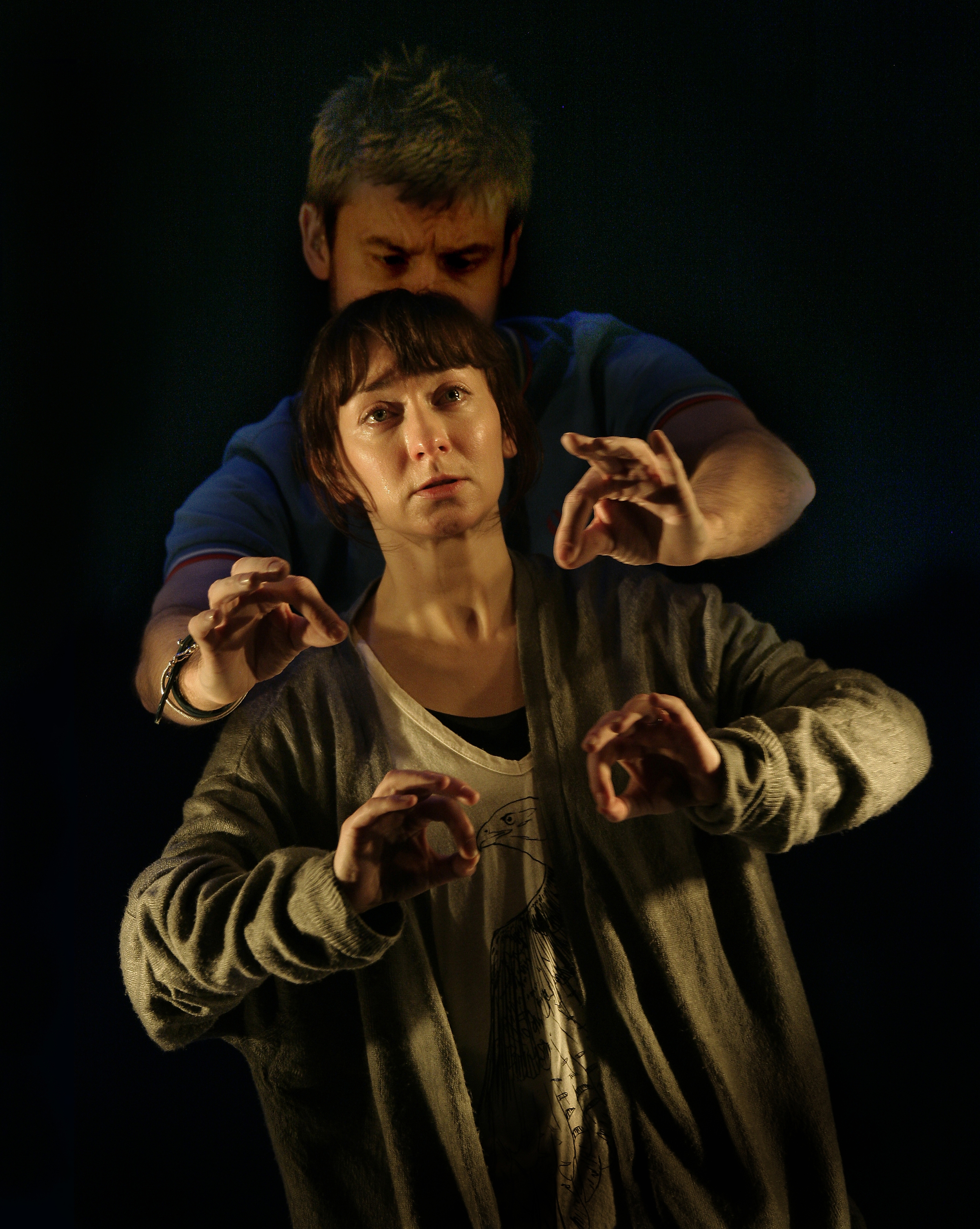
Neve McIntosh & Rudi Dharmalingham in David Greig's The Events, directed by Ramin Gray, 2013.
British Theatre Repertoire 2013: Interim Report
Neve McIntosh & Rudi Dharmalingham in David Greig's The Events, directed by Ramin Gray, 2013.
In 2008, the British Theatre Consortium, of which I am a founder member, was commissioned by Arts Council England to undertake research into the amount of new writing presented in the English theatre between 2003 and 2009. We surveyed the 89 regularly funded theatre organisations (including the national companies, the major reps and several touring and community theatres) and received replies from 65.
Between 1970 and 1985, new work had represented about 12% of productions in the English theatre. In the 90s that proportion rose to around 20%. We found that by 2008, in our sample, the proportion had risen to over 40%, evenly divided between auditoria of under and over 200 seats.
By collaborating with UK Theatre and SOLT, we now have access to far larger and more detailed anonymised data sets for the the whole of the membership of SOLT (the Society of London Theatres, covering the commercial, not for profit and subsidized sectors in the capital) and most venues who are members of UK Theatre (the vast majority of medium and large scale theatres in the rest of the country), for the calendar year 2013.
We hope to publish our report in late February, and to launch and discuss its findings at a conference in April. However we have produced an interim report on our findings about the overall shape of the repertoire.
The most striking finding is that new work (whether written by an individual writer or devised) represents 59% of productions, 64% of performances and 63% of attendances of all forms of theatre.
To see our interim report, click here.
UPDATE: There's been some good press coverage of the report:
- Nick Clark in The Independent
- Matt Hemley in The Stage
- Theo Bosanquet in What's On Stage
- Lyn Gardner in The Guardian
- Maev Kennedy in The Guardian
- David Jays in Arts Journal
And co-author David Edgar wrote a trenchant piece for The Guardian using these findings.
Dario Fo

Rebellato, Dan. 'Dario Fo.' In Fifty Modern and Contemporary Dramatists, edited by John F. Deeney and Maggie B. Gale. Routledge Key Guides. London: Routledge, 2015, pp. 82-86.
I've written a short article on Dario Fo for this new collection of essays. It's a reference book but the articles have enough length to give a fuller labour of the writers involved.
It's a good volume. At these moments it's always interesting to see who the living British writers deemed worthy of inclusion. The latest snapshot of the contemporary canon, then, comprises April De Angelis, Alan Ayckbourn, Howard Barker, Alan Bennett, Edward Bond, Jim Cartwright, Caryl Churchill, Martin Crimp, David Edgar, David Hare, Terry Johnson, Martin McDonagh, Frank McGuinness, Mark Ravenhill, Peter Shaffer, Tom Stoppard, debbie tucker green, and Timberlake Wertenbaker. There are also some dead British playwrights in there still considered contemporary (Pinter, Kane). It's not a bad selection; I might swap out Terry Johnson for David Greig, but hey it's not my book.
Static

from the original production...
My play Static is getting its North American premiere at the Third Rail Repertory Company in Portland, Oregon, opening 0n 24 April this year and running until 17 May. It's directed by the company's artistic director Scott Yarborough and cast announced so far are Maureen Porter, Kelly Godell, and Sam Dinkowitz. Obviously book early to avoid disappointment.
The original was co-produced by Graeae and Suspect Culture and sought to integrate sign language and English into one production, offering slightly different experiences for each community. We used BSL, but this production will use ASL, and it's not a disability-focused company, so it'll be interesting to see how the play feels different in its new context. Also, in 2008, the play was very contemporary in its references. I've suggested they might want to update them (particularly the music references) so that will also be interesting to see. Not sure if I'll be able to get out there but it will be good to see reactions.
Out of the Unknown

Well it's always been an ambition of mine to become a DVD extra and now it's finally come to pass. The BFI has just released all of the twenty surviving episodes of the 1960s BBC TV science-fiction show, Out of the Unknown, on DVD. It's a bloody gorgeous box set and on the first episode, No Place Like Earth, an adaptation of two short stories by John Wyndham, you can, if you wish, choose to listen to a commentary by Mark Ward, a great expert on the series, and me. The thing is moderated by the quietly magnificent Toby Hadoke, actor, comedian, television researcher and fan, who I met when he acted rather brilliantly in my Dead Souls in 2006 and we've kept in touch ever since. Toby is a Doctor Who fan of a depth and intensity that makes me feel like a rank amateur, though we didn't make that connection at the time. Toby invited me to take part in the commentary because of my adaptation of Wyndham's The Midwich Cuckoos in 2003 and in the naive belief that I might have interesting things to say about Wyndham and this adaptation. Whether I did or not, you'll have to judge for yourself. I thoroughly recommend the box set, by the way, which I've only started working through, but it's a beautifully curated collection of some genuinely challenging and progressive television.

Yesterday's Parties
I've written something to celebrate Forced Entertainment's 30 years of work. They've got a page on their website where, through this year, dozens of theatre makers, critics, academics, and others have given their personal memories of the company. The only thing being that each entry is exactly 365 words long.
My piece is written in mild tribute to the company's verbal style, with a particular nod to the superb Tomorrow's Parties (2013, pictured). You can read it and all the other entries, here.

Ballyturk Platform Audio
In September, I interviewed Enda Walsh for a National Theatre platform event. The interview was recorded and you can now hear it here:
![photo[1].jpg](https://images.squarespace-cdn.com/content/v1/513c543ce4b0abff73bc0a82/1362919072201-PZO854G4SEB794DVOEI8/photo%5B1%5D.jpg)