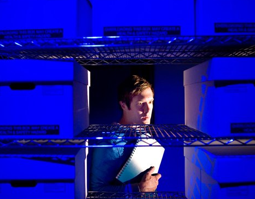
Are you in New South Wales? My play Chekhov in Hell is having a short run at the Pilgrim Theatre in Sydney, Australia. It opens tonight, 16 December, and runs until 21 December. It's directed by Jason Langley and is cast from the graduating company of the Australian Institute of Music. According to the rather nicely-done production notes, there's nudity, violence and bad language, which I'm all in favour of. They've done a pretty cute trailer for it too. Tickets and more information available here: http://www.aim.edu.au/events/2013/chekhov-in-hell
Second Life
There's a welcome repeat for My Life is a Series of People Saying Goodbye , my radio play from 2011. It's on BBC Radio 4 on Wednesday, 6 November 2013, at 2.15pm. If you didn't catch it first time round, it's a tapestry made up of interwoven stories about saying (and not saying) goodbye. Some people have been very generous about the play and found it rather moving. I was very moved when I wrote some of it...

National Theatre's 50th
The National Theatre is 50 this year and to celebrate, they are running a series of platforms and events to reflect on its history and its future. There are three strands: Scene Changes reflects on fifty years of change in the theatre sector; National Histories asks key figures from the National's past and present for their 'Desert Island Discs' of theatre' and Future Questions tries to think where we might be going in the next 50 years. I'm chairing one panel in each strand.
Scene Changes: Theatre Venues: Site specific, found spaces and outdoor
Mon 14 October, 1.05pm (50mins), The Shed
A panel will examine how the use of venues for theatre has evolved over the past 50 years, drawing on their own experiences, and how future technology will affect where art happens. With Punchdrunk Artistic Director Felix Barrett; Director of Forest Fringe, Andy Field; co-founder of ArtsAdmin, Judith Knight; and Jenny Sealey, Co-Director of the Paralympic Opening Ceremony and Artistic Director of Graeae Theatre Company.
National Histories: Charles Kay and Fiona Shaw
Mon 21 October, 6pm (45mins), Olivier
Future Questions: Writing
Wed 30 October, 5.45pm (1hr), Lyttelton
Will theatre continue to inspire writers to produce work for the stage in an increasingly digital age? Will the plays on our stages now be performed in fifty years time? What tone will be set by the next generation of writers?
More details here and you can follow the links to get tickets.
UPDATE: I will also be chairing the following session:
Scene Changes - Theatre Criticism: from broadsheet to blog
Fri 18 October, 1.05-1.55pm, The Shed
Discussing the changing role of the critic in theatre in the last 50 years, print versus internet, and the use of social media. With Michael Billington of the Guardian; the Arts Editor of the East Anglian Daily Times, Andrew Clarke; blogger and arts journalist Catherine Love; and Mark Shenton of the Sunday Express and The Stage.

Two Conferences, Two Weeks, Two Papers
September started busily, with two conferences in successive weeks, at both of which I gave papers. The first conference was the annual conference of TaPRA (Theatre and Performance Research Association) in Glasgow. The second was Turning the Page: Creating New Writing 1945-2013, at the University of Reading.
At Reading, I gave a paper on a panel entitled From Ink to Inc. about changing patterns in new playwriting. My argument was that the distinction between playwriting and writing for theatre - brilliantly proposed by Chris Goode in a blog piece that I have thought about often since I first read it six years ago - is interesting but incomplete and that playwriting AND theatre writing are, at best, the same thing; a play is both complete in itself and incomplete, waiting to be competed by performance. A performance of a play is, in Derrida's terms, a supplement. This is something that problematises the idea of a play's boundaries and produces some very interesting, destabilising effects. It also means, I suggest, that the playwright can never fully collaborate, that there is always a gap or a remainder in the play text. I gave several examples of performances that seemed to work in that gap, deploying its effects. The texts/shows I discuss are Andy Smith's Commonwealth, Deborah Pearson's The Future Show , Chris Goode's Hippo World Guest Book, and my own Theatremorphosis.
In Glasgow, my paper was called Is the Theatre a Zombie? and it concerns Naturalist theatre and neuroscience. I contend that Zola's view of human beings pitches them on the borderline betwee life and death, which is connected with his physicalism: he seems humans as objects of the physical world only, and entirely subject to its rules. As such, the processes and components of the human are neither alive nor dead. I suggest that this connects him with contemporary neuroscience which, in many of its iterations, reduces mind states to brain states. More significantly, there have been arguments against this kind of physicalist reduction from philosophers using the Zombie Argument. A philosophical zombie Is a person who resembles an ordinary human being in every respect but they don't have a mind – instead, they have some way in which they can receive imports and produce appropriate behavioural outputs, but they don't have what philosophers call qualia: they have no experience There is something it is like to be a human being, as Thomas Nagel influentially put it, but there is nothing it is like to be a zombie. But we know that we are not the same as zombies, so the physicalist reduction must be an incomplete description of us. (I shortcut the argument, obviously.) I suggest that zombies are both a manifestation of Zola's physicalism and a problem for it.
I go on to describe another (more famous) thought experiment, John Searle's 'Chinese Room'. The computational view of the mind - particularly in its behaviourist version - says that if you talk to a computer for a certain period of time and it behaves like a human being to the extent that you can't tell whether or not you're talking to a computer, we should say it has intelligence. That's the Turing Test, basically. John Searle imagines being placed in a room with a large set of instructions; people feed Chinese characters on paper into the room; John Searle follows the instructions to write more Chinese characters on pieces of paper and posts them result out of the room. Assuming that the instructions are accurate, to anyone outside the room it would appear that the room understood Chinese. However, as John Searle points out, he does not understand Chinese. Therefore the Turing test is not an accurate way of establishing whether someone possesses understanding or intelligence. In a sense, the Chinese Room thought experiment is very similar to the Zombie Argument; the Chinese room is a kind of zombie.
One objection to the Chinese Room thought experiment - the so-called 'systems argument' - is to say that so may not possess intelligence or understanding of the room as a whole does. Intelligence is produced through a system, a network of relationships, not just through the CPU. Searle's answer to that is to imagine that, rather than possessing a set of instructions on paper, let's imagine that the operator of the room memorises all the instructions. Now it appears that the person possesses internally understanding of Chinese – but still the operator actually does not. I suggest at the end of my talk that in this iteration of the Chinese room argument, Searle is describing a situation much like theatre: a situation in which agents are required to memorise instructions on how to perform certain acts, say certain things, move in certain ways, in response to other things that people do or say. However, that more or less implies that actors are perfect puppets – or perhaps simply paint on the director/artist's brush – which is not a satisfactory image of the actor. The neuroscientific picture of the brain is about as plausible as that model of theatre practice and for the same reasons. My tentative conclusion is that looking at Zola's apparent failure in realising his theatrical ambitions Naturalism might end up being a certain kind of historical investigation into the faultlines of the neuroscientific project.
It's a first pass at the argument, but I hope to elaborate it over the next year or so.

Jessica Carroll and Eva Traynor behind, storifying.
Is British Theatre Too Insular?
Jessica Carroll and Eva Traynor behind, storifying.
I'm on a panel at the Finborough Theatre this Saturday with Clare Finburgh (great French theatre expert) and Mona Becker (dramaturg and thinker), asking whether British theatre - and playwriting specifically - is too insular and parochial, compared to the more internationally-minded French and German theatres. The panel will be chaired by Elizabeth Kuti and will follow her play, Fishskin Trousers (pictured), which has been getting great reviews, so I'm looking forward to seeing that too.
Tickets are free if you're seeing the sow or £5 if you're not.
The answer, of course, is yes and no, but I'll try to be a bit more punchy on the day...
Edward II Platform

John Heffernan as the King
I'm chairing a platform next Monday, 16 September 2013, at the National Theatre. I'm interviewing Joe Hill-Gibbins, who has directed a new production of Edward II by Christopher Marlowe. I've not seen the production yet - in fact I've never seen the play in a theatre, only the Derek Jarman movie - but am looking forward to it. Joe has an interesting track record, working originally with a lot of new work at the Royal Court, but last year directed the remarkable caged production of The Changeling at the Young Vic last year and has a bold, confident way of renewing and revisiting the classics.
The platform starts at 6.00, tickets available from the box office.
Polish Publication

The new issue of the Polish journal Tekstualia has an interview with me and an essay by Bartosz Lutostański entitled 'Wstęp do analizy narratologicznej słuchowisk radiowych' [Introduction to the Narratological Analysis of the Radio Play] focusing on my play Cavalry. I spoke at a conference in Poland in May 2012 and the interview is a transcript of an interview conducted at a theatre in Gdansk following a hearing of my play Cavalry. You can, should you wish, read the interview transcript in English here.
I don't have a translation of Lutostański's article though Google Translate does supply a very rough mechanical translation of the opening paragraphs here. This is the abstract:
Narratology is nowadays an extensive discipline of literary studies relating to particular media (literature, film or theatre) and particular disciplines (philosophy, sociology or psychology). However, this narratological plurality still fails to include numerous artistic phenomena, for example a radio play; its narratological analysis is presented in the following paper. In order to tackle the variety and complexity of a radio play, I use various methodologies drawn from the narratology of literature and film and the theory of theatre. Dan Rebellato's Cavalry serves as the prime example insofar as it demonstrates that a radio play's general narrative features (for example, level construction and focalisation) as well as radio-specific features (microphone and space construction) can be successfully examined from the narratological standpoint without ignoring the specificity and individuality of a radio play as a legitimate work of art.
Which is all very lovely.
A Cover That Never Was

For various reasons I just went through my files about the book 1956 and All That and came across this oddity. I don't think Routledge were sure how to market the book. The first cover they designed for it (left) played on the book's interest in the emotional register of the pre-Osborne West End and they used this rather lovely photograph of Peggy Ashcroft and Kenneth More in the original West End production of The Deep Blue Sea in 1952. It looks like a work of romantic fiction.
On reflection, I wonder if the book would have had half the impact it has had with that cover. This looks like a chintzy and old-fashioned book, celebrating an old-fashioned culture. In fact, I think, the book felt very current in 1999 because of its theoretical allegiances, its interest in queer experience, and its interest in rethinking the significance of the Royal Court. The cover we eventually got is a strangely brilliant photograph by Cecil Beaton showing Noel Coward and two leading ladies, from behind, bowing in front of an empty audience, an image that plays with some of the paradoxes of theatre and far better sets up the tone of the book.

National Theatre podcasts
A couple of the platforms that I've chaired at the National Theatre have been made available as podcasts. You can subscribe to them via iTunes or you can listen to them on Soundcloud. Direct links below.
- An interview with Enda Walsh about Misterman.
- An interview with Professor Cynthia Marsh about Gorky.
- An interview with Alecky Blythe, Adam Cork and Rufus Norris about London Road.
We, Margaret

Blink and you miss it. My playlet, We, Margaret, was performed last night at Theatre503, as part of Thatcherwrite, an evening of pieces about Margaret Thatcher and her legacy. My play was for the whole cast and involved them performing like a socialist choir from the 1930s a text made up verbatim from comments by Margaret Thatcher on the importance of the individual. The piece has proved technically too difficult to pull off properly, so we're not continuing with it right through the run, so if you didn't see it last night, tough cookies, you missed it. But, then, so did I.
More information about it, including the script, here.

Seagull Platform
I'm chairing a platform on Wednesday 29 May 2013, after the Headlong production of The Seagull at the Richmond Theatre. It's free to ticket holders. On the panel will be the writer John Donnelly, director Blanche McIntyre, and Professor Cynthia Marsh who was a brilliant interviewee in my panel on Gorky's Children of the Sun back in April. Should be good; see you there. Wave.

Table Platform
This is an interesting one. This week, I'm chairing a post-show panel at the National, following Tanya Ronder's powerful new play Table. The play follows a family history centred on a table that has been in the family's possession for over 100 years. The table is eaten at, pissed on, fucked on, hidden under, cut, dismembered and transported across the world.
The panel I'm chairing looks at tables and the role they play in family life. The guests are Nick Humphrey, a curator in the V&A’s furniture department, and Jonathan Pratt, and auctioneer, often seen on programmes like Bargain Hunt and Antiques Road Trip. We'll be discussing the play and subject of furniture in the form of a table, reflecting on its changing role in our daily lives, and the social history that can be traced in everyday objects.
The panel is on 9 May at 10.25pm, straight after the performance of Table. It's free to ticket holders, £1 for everyone else. Tickets bookable here.
Thatcherwrite

Theatre503 is producing an evening of theatrical responses to Margaret Thatcher and her legacy. I'm one of the writers; others who have been invited include Fraser Grace, Judy Upton, Dominic Cavendish, Maxine Quintyne-Kolaru, Brad Birch, Jon Brittain, Omar El-Khairy, and Gemma Langford. The evening will comprise a whole series of short plays and performance pieces. Steve Harper is the literary manager of 503 and his aim is to create a spread of views rather than just a straightforward and predictable anti-Thatcher event.
Steve says the following:
'No other figure in living memory has been the catalyst for such divisive expressions of emotion - honoured by the pomp and regalia of a ceremonial funeral whilst mocked as a burning effigy on makeshift funeral pyres. Love her or hate her, her unique achievements were many, her personality etched onto the history of this country, for good and for bad. She was a game changer, leaving the country and the political landscape she inherited irreparably altered.'
I don't know all of these other writers so I can't say if he's going to be successful in finding playwrights who love her, but it's an interesting idea.
My plans involve a revival of an old socialist theatre form and a lot of Margaret Thatchers. There was a preview of the show in The Independent.
The show will run 11-15 June at Theatre503. Performances begin at 7.45pm.
Interview

A couple of years ago Jake Urry, a student at the University of Central Lancashire, conducted an interview around the time that Chekhov in Hell was on. He's now set up a theatre company, Just Some Theatre, with fellow student Peter Stone (both pictured) and they're touring Coward, a play by James Martin Charlton.
To help add interest to the company website, they've asked to put up interviews with me, James and Gregory Burke. Here's the interview with me.
Maria Miller

This morning, Maria Miller gave her first speech on the arts after seven months in post as Culture Secretary. She's come out good and clear as seeing the arts in almost exclusively econometric terms. The piece tries to think through the limits of that.
Our Press Office at Royal Holloway suggested I write something about it that they'd try to place. To be honest, I thought they'd just send it round a few press agencies and it might end up being quoted in a couple of places. Instead it's been published on the Guardian website and is getting some good traction with retweets and links.
You can read it here. I should also say, I have no idea what the Culture Professionals Network is. If anyone know, do email or tweet me at the usual addresses.
Missing
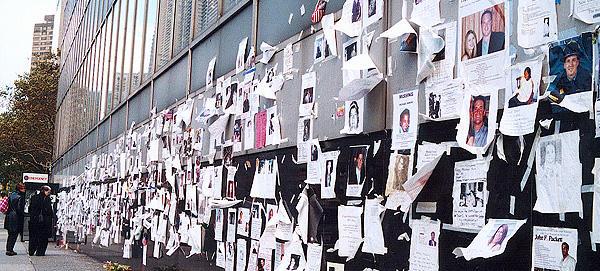
Forest Fringe are today launching their curated season at the Gate Theatre in Notting Hill. Last year, they had a series of posters in the foyer by the wonderful Tim Etchells. This year, they've decided to do the same again but source their posters from various artists and writers they know. Andy Field asked me to do one, so I have. You can see them all in the foyer of the Gate Theatre. I don't think you have to see a show to see them, but, since you're there, it wouldn't hurt. The season runs until 4 May.

In Battalions
The excellent playwright Fin Kennedy, together with researcher Helen Campbell Pickford, has put together a piece of research, entitled In Battalions ('When sorrows come, they come not single spies / But in battalions.' Hamlet 4.5).
The report challenges the current Arts Minister Ed Vaizey who has asserted that the cuts in arts subsidy is having "no effect" on British theatre. In Battalions suggests that they are already having a very significant effect, particularly on the development of new plays but, in fact, on new work generally. The report finds significant cutbacks in productions, commissions, residencies, development time, cast sizes, touring, and more.
Ed Vaizey got the report two months ago. He has not responded. So Fin has got together an open letter to Ed Vaizey, requesting a formal response to the report, and he's managed to get it signed by a fantastically impressive list of writers, directors, managers and actors, including Caryl Churchill, Vicky Featherstone, Michael Frayn, Dennis Kelly, Mike Leigh, Helen Mirren, Mark Ravenhill, Simon Stephens, Tom Stoppard, and, perhaps not quite as impressively, me. The letter has got good coverage from the Guardian, Independent and Equity.
It's a powerful, worrying report and a stirring letter. I'm pleased and proud to be adding my voice right now.
Commission

I've been commissioned to write another play. Always good news. It's another one from the Drum in Plymouth. I had an idea for a play last year which I realised I wanted to write rather quickly. I asked Simon Stokes if he would turn my existing commission into one of this new play. Instead he decided he really wanted that other play but wanted to commission this new one as well.
The new play is a response to the horrific revelations around Jimmy Savile's lifetime as a predatory, determined and devious paedophile and also to the complete lack of perspective or proportion in the coverage. It's also likely to be not a comedy, but something that uses comedy to crank open some of the contradictions. It's going to have to tread a very fine line.
Booing

Photo: Press Association
My short article on booing has just been published by Contemporary Theatre Review in their special themed issue: Alphabet: A Lexicon of Theatre and Performance. I think it's a fun piece of work, even though short, and manages to say a fair bit about a range of different things. More information here. I should add that, having read the whole issue cover to cover (how often does one do that with a journal?), it's a pretty great read and has some great little pieces by some of the most interesting thinkers in theatre studies (present company excepted).
Gorky Platform

On Thursday 18 April 2013 and 6.00pm, I’m chairing a Platform on Maxim Gorky to coincide with the new National Theatre production of Children of the Sun. I’ll be interviewing Cynthia Marsh, Emeritus Professor of Russian and Slavonic Studies at the University of Nottingham. We’ll be discussing Gorky’s distinctive approach to writing for theatre, his politics, and the specific circumstances of the writing of Children of the Sun while in prison for his part in the abortive 1905 Revolution.
Tickets available here.
![photo[1].jpg](https://images.squarespace-cdn.com/content/v1/513c543ce4b0abff73bc0a82/1362919072201-PZO854G4SEB794DVOEI8/photo%5B1%5D.jpg)