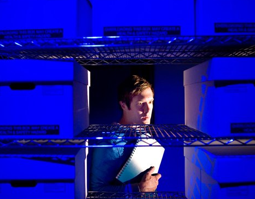
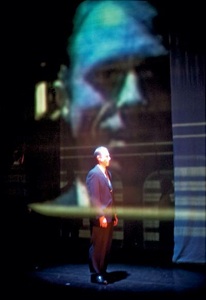
In September, I interviewed Enda Walsh for a National Theatre platform event. The interview was recorded and you can now hear it here:

Table
'The penalty for good people
who don't get involved in politics
is to be governed by people
inferior to them'
Plato Republic.
I've never felt more strongly in my life that we don't have the politics we need.
It's not just that politicians need to 'reconnect with ordinary men and women', which is another soundbite which has ended up as a way of putting something in the way of the solution rather than a solution itself.
No, we have to take control of politics. You and me. I mean this. Politics can't be left to the politicians; they have manifestly failed for a generation to engage us. If the Right has one good idea it is that we shouldn't expect government to do everything for us; but not because we should become business entrepreneurs - we have to become entrepreneurs of politics.
Scotland has just done this. The referendum debate animated the whole of Scotland. Why can't that happen in England (and Wales and Northern Ireland)? Are the Scots more intelligent than the English? Of course not. Do they care about their country more than we care about ours? I hope not but there's only one way to find out.
I've got my views about what should happen, but I could be wrong about all of these things. I want to have the argument, hear opposing views. I want to live in a country where we all think about these things. I want to discover I'm wrong.
So here's the proposal. Let's meet and talk. You, me, anyone who wants to join in an open conversation about what future we want and is prepared to get involved to move this country even an inch towards that future.
I've chosen 6 November. It's a Thursday. Near enough the end of the week for a drink but I'm not trying to occupy your precious quality time. I'll book a room somewhere in Central London. If you can't get there, why not set up your own meeting? We can share our experiences afterwards. I've called this a 'Table' meeting, because there's little more I like than sitting round a table with friends, talking ideas, having a drink, making plans.
Our debate needs to be completely open. It needs to be a politics of the imagination. I've been a Labour Party supporter and member for almost 30 years (with an Iraq-War-inspired break) but I'm not going to assume the Labour Party must be the focus for this. It could be the Greens. It could be a new party. It might not be a political party at all. Everything should be on the table. Let's sit round and talk about politics. Let's make a start.
Let's meet in an endless variety of forums and think together, talk and debate, discuss, passionately and sedately, over coffee and over beer, in council chambers and pubs and online and offline and in old school rooms and front rooms and marquees. Let's sit in the park and talk about voting systems. Let's drink wine under trees and ask what Britain we want to see before we die.
Let's think visually and emotionally and rationally and let's put our hearts into this.
Let's put laughter and love and beauty into our new politics.
Let's not wear suits (unless you like wearing a suit, in which case wear a suit).
Let's start again, let's be naive, let's be hopeful.
Let's imagine anything is possible and let's remember that actually anything is possible.
Let's believe these things matter and let's remember that they actually matter.
Let's not tell ourselves that it won't work; let's ask, what if it worked?
Let's not ask: but what can we do? Let's ask: what can we do?
I mean this. I don't care if it's just two of us, you and me, because that's a start. But maybe it'll be thirty of us. Or one hundred. Or a thousand. Contact me on twitter or email me if you want to be involved.
What's the worst that can happen? We have an evening of drinking and talking and we meet some new people. What's the best that can happen? We start something.
Let's start something.

Letter to The Stage
I'm co-signatory to a letter in The Stage refuting Simon Tait's article, which responds to the Tricycle Theatre's offer to replace the Israeli government's funding of the Jewish Film Festival by falsely claiming that the Tricycle cancelled the Festival and declaring that artists should not make non-artistic decisions.
The letter is also signed by Caryl Churchill, Dominic Cooke, April de Angelis, David Lan, Elyse Dodgson, Aleks Sierz, Tanika Gupta, David Greig, Stephen Jeffreys, Carl Miller, and Laura Wade. It insists on the importance of artists making a stand against Israel, particularly given the asymmetrical war it has just waged against Gaza. It notes the extraordinary pressure placed on the Tricycle's artistic director, Indu Rubasingham, by members of our government. It also notes that we cannot separate ourselves so easily from the violations of human rights.
I'm not one for blanket boycotts. I have been asked several times to join the academic boycott against Israel and I've always refused, because I know some important voices against the illegal actions of Israel are in the universities and their position is embattled enough within their country.
But the situation with the Tricycle is that a theatre wanted to host a film festival and at a time when one of the sponsors of that Festival was directly engaged in a murderous assault on its enemies, it found a solution which would be to offer to replace Israel's funding with its own money. This has been deliberately interpreted in the worst possible way and Rubasingham has been forced to back down. It's a matter of artistic and political freedom which is why I have signed.
Conference Summer
I've given a couple of papers at conferences this summer, both trying out ideas from the book I'm writing on Naturalist theatre.
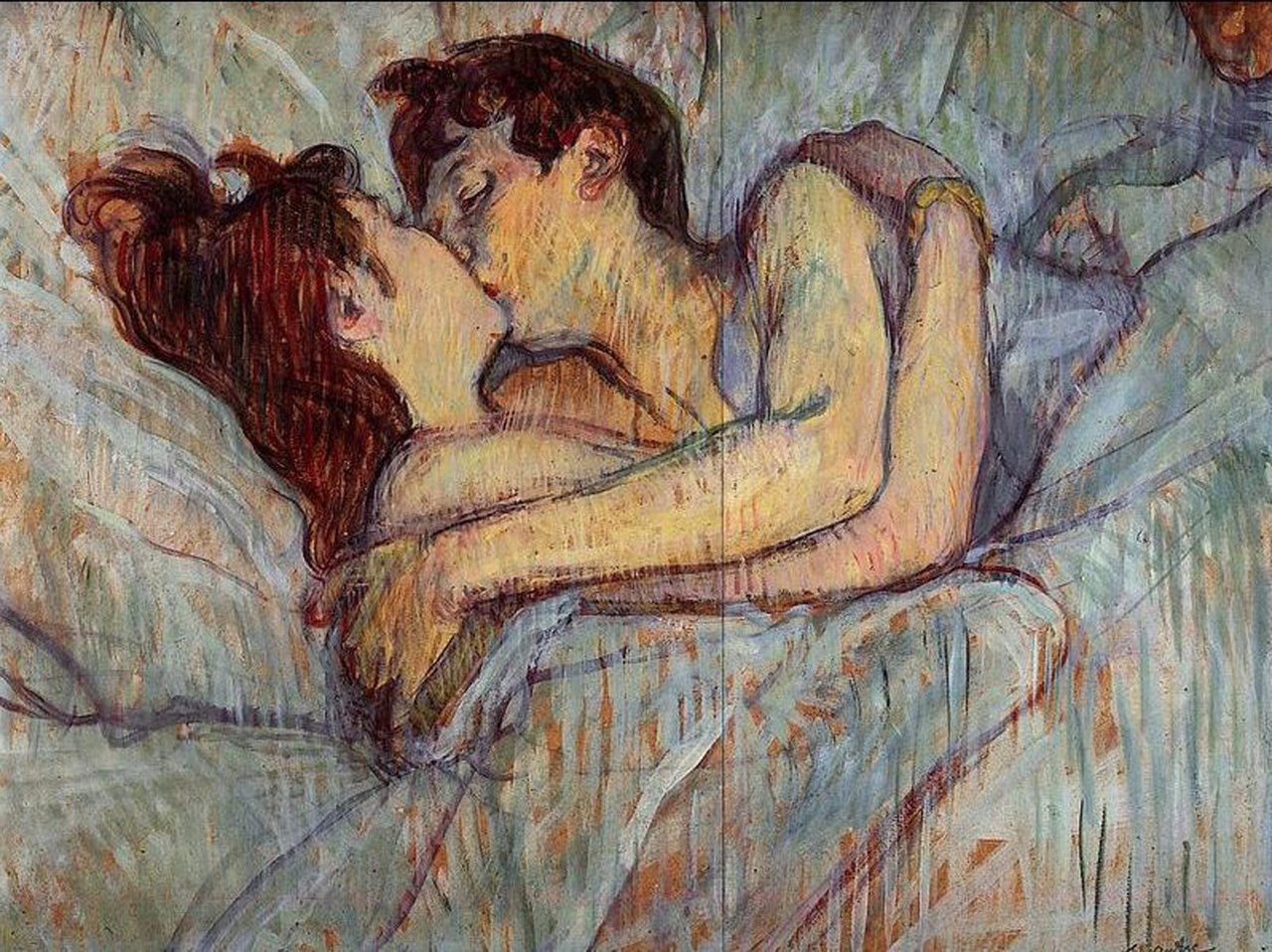
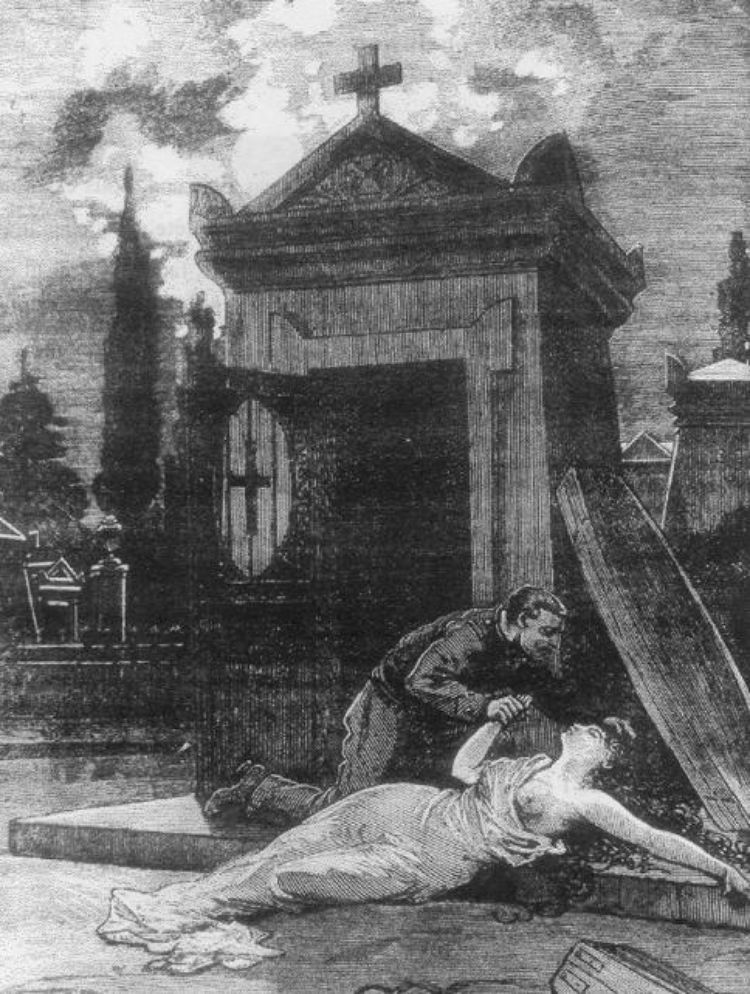
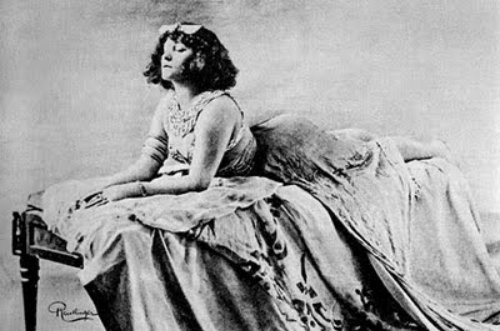
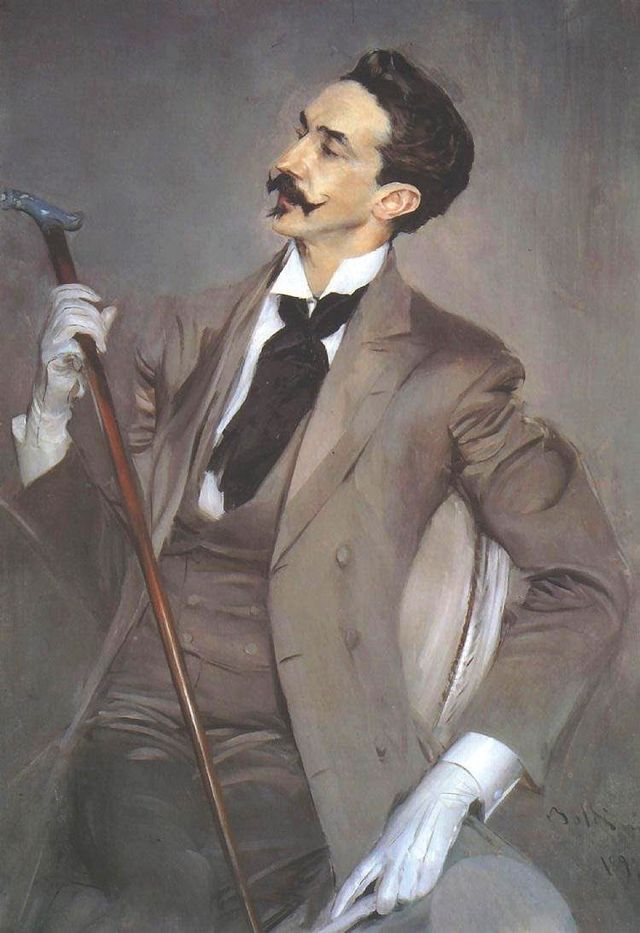
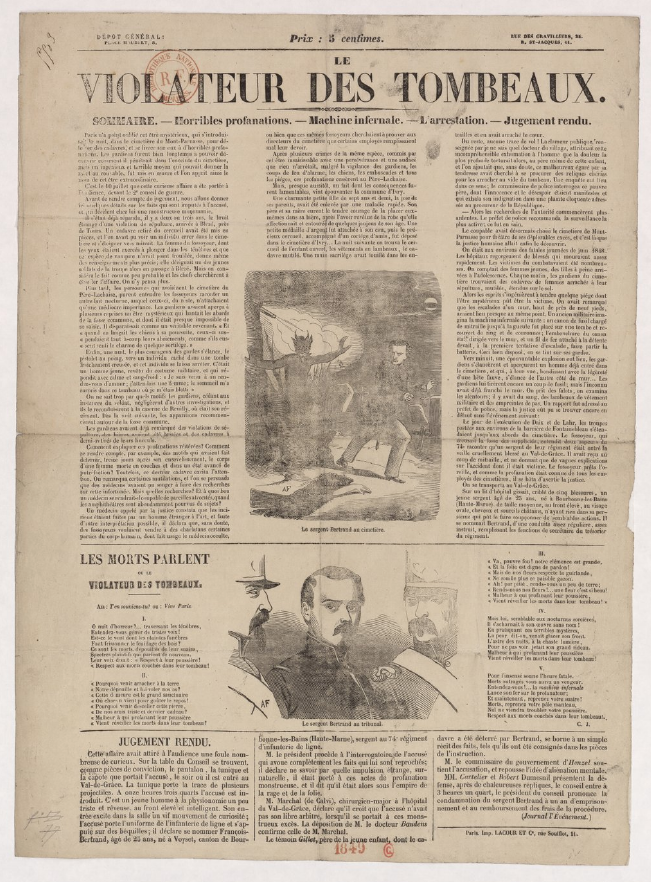
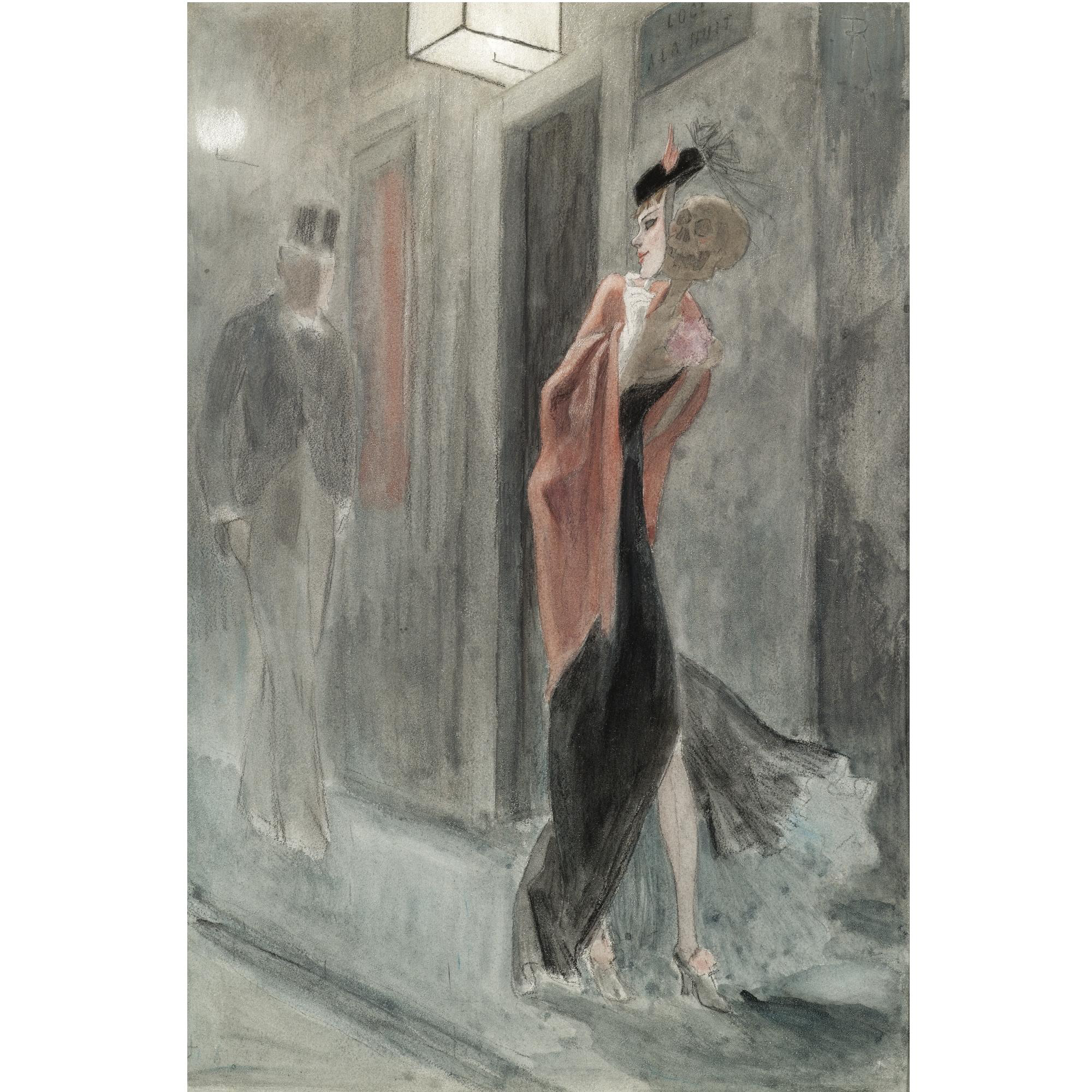
The first was at IFTR/FIRT [International Federation of Theatre Research] which this year was held at the University of Warwick. The title is Naturalism and necrophilia, starting with the case of the necrophile soldier Sgt François Bertrand and tracing the play of images of necrophilia in nineteenth-century French literature, ending up in Naturalism where they try to bury these tropes but find them soon scrabbling in the dirt for them.
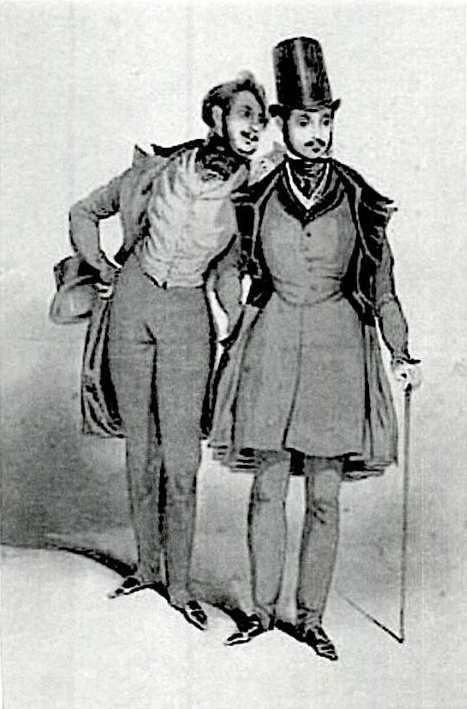
The second was at TaPRA [Theatre and Performance Research Association] which this year was held at Royal Holloway. My paper, to the Theatre History and Historiography Working Group was entitled 'Whatever Happened to Gay Naturalism?' and asks why Naturalism found it so difficult to address the topic of homosexuality, despite it being topical, a social 'problem', scientifically endorsed and talked about elsewhere. I suggest that homosexuality becomes a kind of faultline that reveals some problems and inconsistencies in the Naturalist project.
I'm still working on these ideas and hope to give developed versions of these papers in various places - and they'll end up ultimately in the book so I won't put them up here, but you can read slightly more elaborated descriptions of the arguments here and here.

All Back to Bowie's
At the Brit Awards in February 2014, David Bowie, speaking through Kate Moss, made a four-word intervention in the Scottish Independence debate: 'Scotland, stay with us'. Inspired and amused, a group of key figures in Scottish arts, politics and academia have got together to host a series of discussions and interventions on the subject of Scotland's future at the Edinburgh Festival this year, under the title All Back to Bowie's.
David Greig, a prime mover in this project, asked me to contribute to one of the events:
WEDNESDAY 13 AUGUST, 12.20pm
From Ibiza to The Norfolk Broads – We Need To Talk about England
With Kieran Hurley, David Greig, Leo Glaister, Dan Rebellato, Loki.
12.20pm daily
£8 (£6)
Stand in the Square
St Andrew Square, EH2 2AD
(Venue 372)
My contribution is a video in which I suggest a radical new relationship between Scotland and England.

Ballyturk
I'm interviewing the great Enda Walsh about his new play and production, Ballyturk, for a Platform at the National on 19 September 2014 at 6.00pm. Tickets available here. I'm particularly looking forward to this, not just because Enda Walsh is a rather brilliant writer and producer of extraordinary evenings of theatre but he's a great interviewee. I interviewed a couple of times about his play Chatroom and then did a Platform about Mister Man (oh, which you can listen to here) and he has a wired enthusiasm and energy that makes him an inspiring figure to talk to. See you there.

The Wonderful World of Di by Anthony Neilson (National Theatre of Scotland, 2005 - and toured to Royal Court, 2007): Photo: Douglas Robertson.
Keeping it Real
The Wonderful World of Di by Anthony Neilson (National Theatre of Scotland, 2005 - and toured to Royal Court, 2007): Photo: Douglas Robertson.
I've written an article about the Royal Court and realism. It's for Contemporary Theatre Review's companion website. Vicky Angelaki and I ran a day-conference at the Royal Court on the work of Martin Crimp to concede with the production of his In the Republic of Happiness and now a selection of essays has emerged from that day in a special issue of CTR. There are some companion pieces on the website, including a witty pastiche essay by Aleks Sierz, something on translation by Elisabeth Angel-Perez and a video of Crimp and George Benjamin discussing the opera, Written on Skin.
My piece tries to argue that the Court's supposed realism is poorly understood. First, because it has a very strong counter-tradition of formally experimental work. Second, because realism is a slippery word - and I try to specify the nature of its commitment to realism.
You can read it here.
Many thanks to Elyssa Livergant and Theron Schmidt for their sensitive editorial work.
Critical Mass

Last year I was given a grant - as part of the British Theatre Consortium - to investigate theatre audiences, what they do, how and why they value theatre, and the roles it plays, if any, in their lives. The principal investigator was Janelle Reinelt at Warwick University, and Chris Megson (Royal Holloway), Julie Wilkinson and I were co-investigators, with playwright David Edgar as consultant and Jane Woddis (Warwick) as project manager. We partnered with The Royal Shakespeare Company, Young Vic, and Drum Theatre, Plymouth taking nine shows from their 2013-14 seasons and exploring audiences responses to these shows by a series of questionnaires, interviews and workshops.
The findings are necessarily provisional and offer, more than anything, suggestions for new directions of research. What is clear from all the research is that the theatre is highly valued by its audience and that its value is entwined in its audience's lives: we had evidence of people using the theatre as an opportunity to inform and articulate their political views of the world, to reflect on their lives and relationships, and to come to terms with ageing, mortality and loss. We suggest also that theatre spectatorship might be fruitfully considered as a long-term activity, in two senses: first, there is evidence that the memory of a single show matures and changes over time, beginning with an appreciation of the theatre's sensuous immediacy and then, within a couple of months, becoming a more reflective, cognitive memory; second, there is plenty of evidence that theatregoing is something that enriches a person to the extent that it may be considered a key part of life-long learning.
You can read the report by clicking on the cover (above) and David Edgar wrote a valuable article for The Guardian about it, which you can read here. There are some more commentaries on the report here and here.
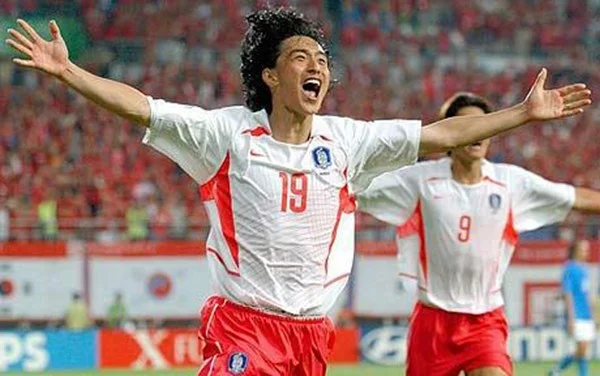
South Korean footballer Ahn Jung-Hwan
Copenhagen
South Korean footballer Ahn Jung-Hwan
I've just given a talk on theatre and globalisation as part of the Nordic Performing Arts Days season and specifically the CPH Stage theatre festival in Copenhagen. One of themes this year is globalisation and I was invited by Jesper Pedersen, Creative Adviser at Teater Grob to give a talk on theatre, globalisation and cosmopolitanism, which I did on Saturday 21 June 2014. The theatre are ⅓ of the way through 6 Continents, an ambitious cycle of six plays looking at Danish identity in a globalised world.
Jesper invited me because he'd read my Theatre & Globalization and some of the argument chimed with his thinking about the role of the imagination and its relation to cosmopolitanism in theatre. My talk rehearsed some of the arguments in my book but framed it with a discussion of football. Given that, the day before, England had been knocked out of the tournament at the group stage and Denmark didn't qualify, it felt like neutral territory. I began with the fallout from Ahn Jung Hwan's golden goal in the 2002 World Cup, which knocked out Italy, and led to his being sacked from his domestic football in Perugia, Italy. I suggest that in this we see two rival models of geo-political organisation - tightly-regulated regional identity and unconstrained international flows of labour - and from there I talked about the Bosman ruling, the Lisbon Lions, catenaccio, and the Gre-No-Li strike force. I ended with a discussion of the dematerialisation of the artwork, looking at Three Kingdoms, Paul Bright's Confessions of a Justified Sinner, The Author and Adler & Gibb. If I'd had time, I'd have looked at The Events, but hey, you can't have everything.
I was beautifully looked after in Copenhagen, hugely impressed with Teater Grob and the vitality of the Danish theatre culture, and after my talk they served talk-themed cocktails: cosmopolitans. That's got to be good.
I gather the talk will be podcast, at which point I'll add it here.

The opening scene of Chekhov in Hell at St Bede's Senior School, East Sussex
Chekhov in Sussex
The opening scene of Chekhov in Hell at St Bede's Senior School, East Sussex
Chekhov in Hell has had another outing, this time by students of Bede's Senior School in East Sussex under the guidance of Richard Waring. I couldn't make the show (in early May), but I've seen a DVD of it and it's a strong, bold, intelligently cartoonish production around a strong central performance. The play was trimmed and reordered - the most interesting thought being to place the 'Northern Lights' scene at the end, during which the very first scene - Chekhov's death - is gradually recreated, making the events of the play seem to be the fevered dreams of a dying man. Good to see Chekhov still out in the world.

Katie Mitchell, photo by Stephen Cummiskey
Polish Publication
Katie Mitchell, photo by Stephen Cummiskey
My essay on the work of Katie Mitchell from a book I co-edited, Contemporary European Theatre Directors, seems to have been published, translated into Polish, in the theatre journal Didaskalia. In English it's 'Katie Mitchell: Learning from Europe'. It's now:
'Katie Mitchell. Uczenie Się Od Europy.' Didaskalia Gazeta Teatralia 119 (2014): 84-92. Print.
Good fun.

Local Hero (dir. Bill Forsyth, 1983)
David Greig Paper
Local Hero (dir. Bill Forsyth, 1983)
The University of Lincoln hold an annual festival and symposium dedicated to a different playwright. They've done Caryl Churchill, Mark Ravenhill and Sarah Kane. This year it was David Greig's turn and I was asked, by the conference organiser Jackie Bolton, to give a keynote. My paper was on the place of place in Greig's work, particularly thinking about his distinctive contribution to the Scottish Independence debates. As is rather well known, he once declared that you can't be a good writer and a good nationalist. I suggest that he's presenting good nationalism and good writing, but by presenting a non-territorial notion of Scotland's independence, founded in imagination and possibility rather than glen and byre. I suggest we might think of this as localism under erasure and nationalism without nation. The paper gets its title and a starting point for its thinking from Bill Forsyth's lovely 1983 movie, Local Hero.
You can read my rough draft of the paper, typos and annotations and all, here.
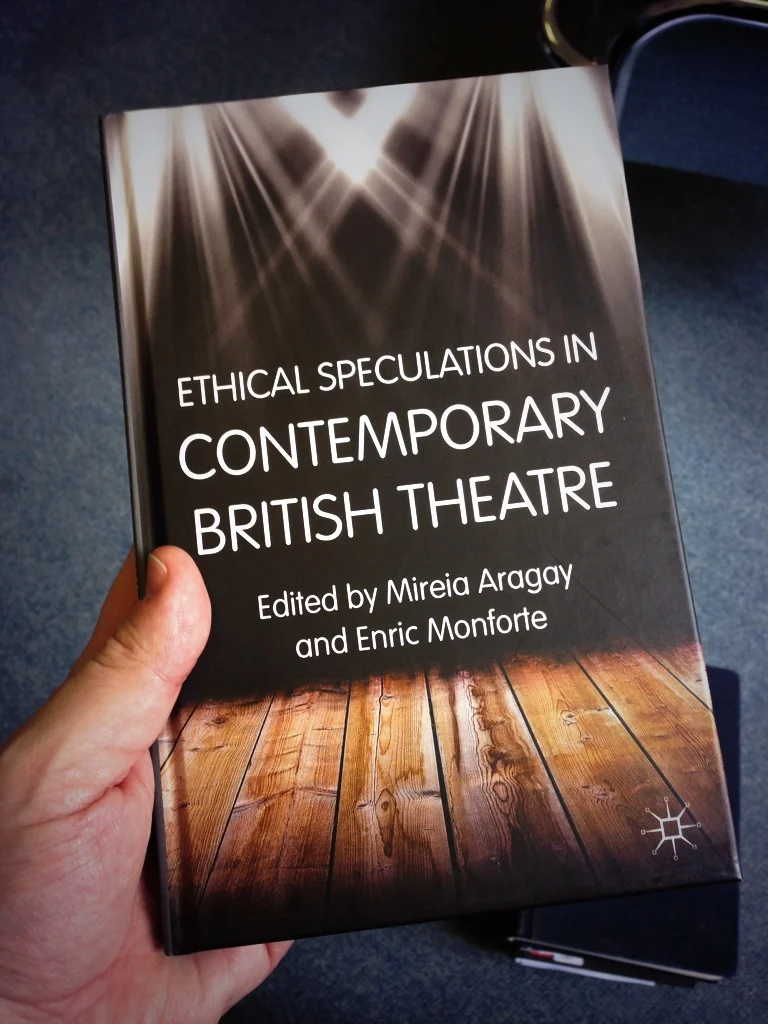
the very book in my very hands
It Takes Two
the very book in my very hands
I can't begin to imagine how excited you will be to hear the news that I have a new article out. 'Two: Duologues and the Differend' is a chapter in a new collection, Ethical Speculations in Contemporary British Theatre, edited by Mireia Aragay and Enric Monforte of the University of Barcelona, two of the very loveliest people I have ever met in academia.
The collection brings together various people looking at ethical debates and dimensions in contemporary British theatre. My piece looks at the prevalence of the 'duologue' or 'two-hander' in contemporary playwriting and offers some thoughts about how it might be interpreted. The argument also looks at Jean-François Lyotard's notion of the 'different' which occurs when there is an incommensurable dispute between two parties who share no common language game in which to resolve the dispute. I suggest that this does and doesn't explain the vogue for the duologue and offer an alternative account.
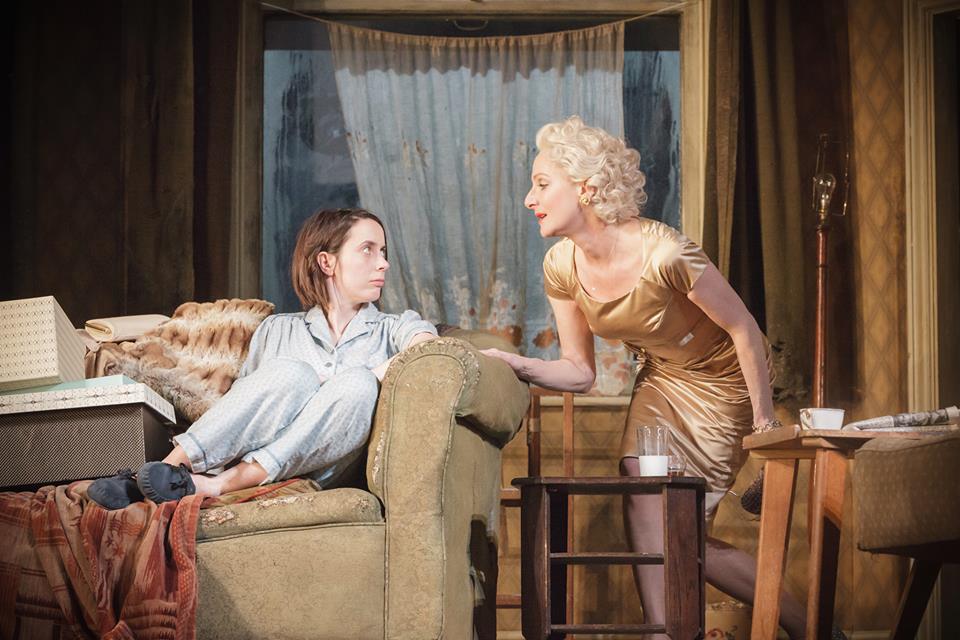
Kate O'Flynn and Lesley Sharp in A Taste of Honey at the National Theatre. Photo: Marc Brenner.
A Taste of Honey Panel
Kate O'Flynn and Lesley Sharp in A Taste of Honey at the National Theatre. Photo: Marc Brenner.
I'm chairing a panel about the National Theatre's current production of Shelagh Delaney's A Taste of Honey. I'll be talking to the director and designer of the production, Bijan Sheibani and Hildegard Bechtler. I've interviewed Bijan before, about Our Class and The Kitchen. I've not met Hildegard before, though I've adored her sets for years...
This is a superb production, by the way, an extraordinary revelation, even if you think (as I did) that you know the play really well. The performances by Lesley Sharp and Kate O'Flynn are simply out of this world. Rich, funny, complex, sad, and wise. The rhythm and shifts of tone are astonishing and the set is just a whirl of movement and life. I can't wait to talk to them about it.
It's on 20 February 2014 at 6.00 in the Lyttelton.

Inaugural Lecture
When you get made professor, you have to give an 'inaugural lecture', which is a big public lecture on you and your research. I managed to give that the slip for eight years, but they finally caught up with me.
So I inaugurated. My talk was on the new project, Naturalist Theatre. The title was Theatre, Sex and Zombies: The Strange Case of Naturalist Theatre. You can listen to it and to Mark Ravenhill's very lovely vote of thanks afterwards here. But if you'd rather do things the traditional way, you can read it here and look at the slides here.

Quorum Zombies
I'm giving a paper at Quorum, the post-graduate seminar series at Queen Mary, University of London. It's entitled 'Is the Theatre a Zombie?' I gave a much earlier (and briefer) version of that paper at TaPRA last September, but this is a significant development of that material. The way this one has turned out, I'm talking a great deal about neuroscience, trying to offer a dose of scepticism about some of its wilder claims. I rehearse the clash between physicalists and anti-physicalists in philosophy and connect it to Naturalism via what is called 'the zombie problem'. I'm always impressed when I meet Queen Mary postgraduates so it'll be an exciting, challenging opportunity to rehearse some of the ideas I've been developing over the last year.
12 February, 5.30pm, RR1, Arts1, Mile End Campus, QMUL. Maybe see you there.

Rebecca Callard and Katie West in Blindsided, not me chairing the panel.
Blindsided Panel
Rebecca Callard and Katie West in Blindsided, not me chairing the panel.
I'm chairing a pre-show discussion at the Royal Exchange with Simon Stephens and Sarah Frankcom, respectively the writer and director of Blindsided, a new production at the theatre. Blindsided is set in Manchester in 1979 and depicts a relationship, its rise and fall, and the terrible consequences that follow it. The discussion is on Saturday 1 February at 1.00 in the theatre. Free entry but ticketed, call, the box office on 0161 833 9833.
Theatre in Higher Education

Students performing in Royal Holloway's Boilerhouse Theatre
I'm a bit late posting this up, but I was interviewed by Daniel Marc Janes a few months ago for Pod Academy, a site that posts podcast interviews with academics. We met in the basement of the John Calder bookshop on The Cut and discussed, among other things, the history of Drama in the academy, the value of theatre and education, the politics of the imagination, Edward Bond, Immanuel Kant and Twitter. It was, I think, a good interview, gently testing but generous and open.
You can read a transcript or listen to the interview here.

Here I am speaking at the On and On Theatre Conference
Hong Kong Interviewey
Here I am speaking at the On and On Theatre Conference
I was in Hong Kong just before Christmas. My first visit to Asia, I'm faintly embarrassed to say, and it was a wonderful introduction, my hosts, including Pat To Yan, Vee Leong, Chan Ping Chiu, Janice Poon and many more. I gave two talks, one at their conference and another, open to the public, at the Cattle DepotTheatre in the Artists Village, Kowloon.
One of the most enjoyably strange things was being interviewed by Winnie Chau for Muse, an online cultural magazine for Hong Kong. The interview series is called '10 Stupid Questions'; in fact the questions weren't stupid, but the title does capture the provocative juxtaposition of topics that we went through.
You can read it here.
Chekhov Returns Again

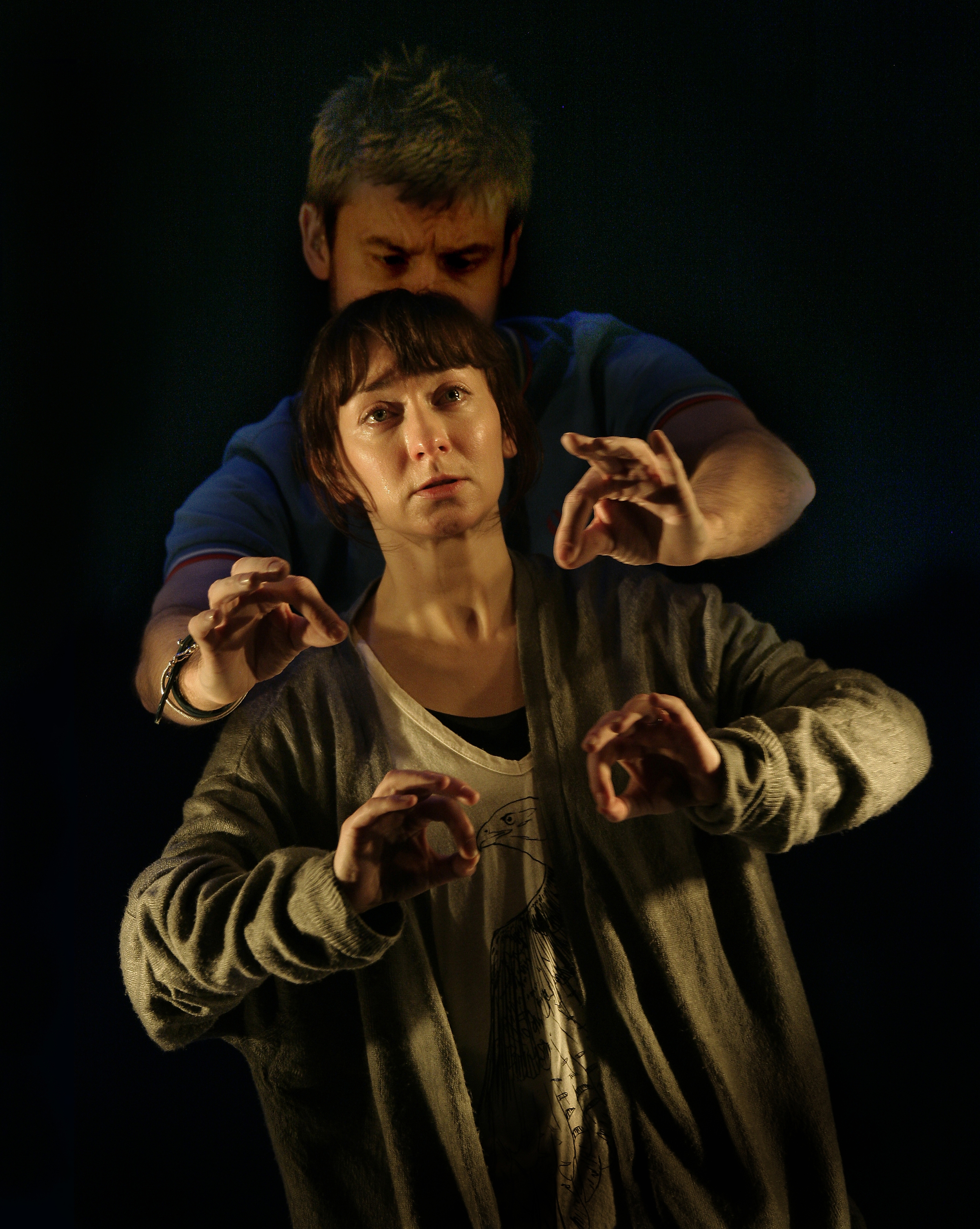
And another production pops up. Slightly too late for me to publicize it because it's over but third-year students at Middlesex University have put on a production of Chekhov in Hell as part of a five-show festival. Luke Willats was in the title role and the show was produced by a company with the frankly disgusting name 'Meat Factory'. There were three performances at various times 17-19 December.
I like the poster very much. It's over there, look.
![photo[1].jpg](https://images.squarespace-cdn.com/content/v1/513c543ce4b0abff73bc0a82/1362919072201-PZO854G4SEB794DVOEI8/photo%5B1%5D.jpg)